
Boxing Prop Bets UK: Knockdowns, Point Deductions and Novelty Markets
 Available in US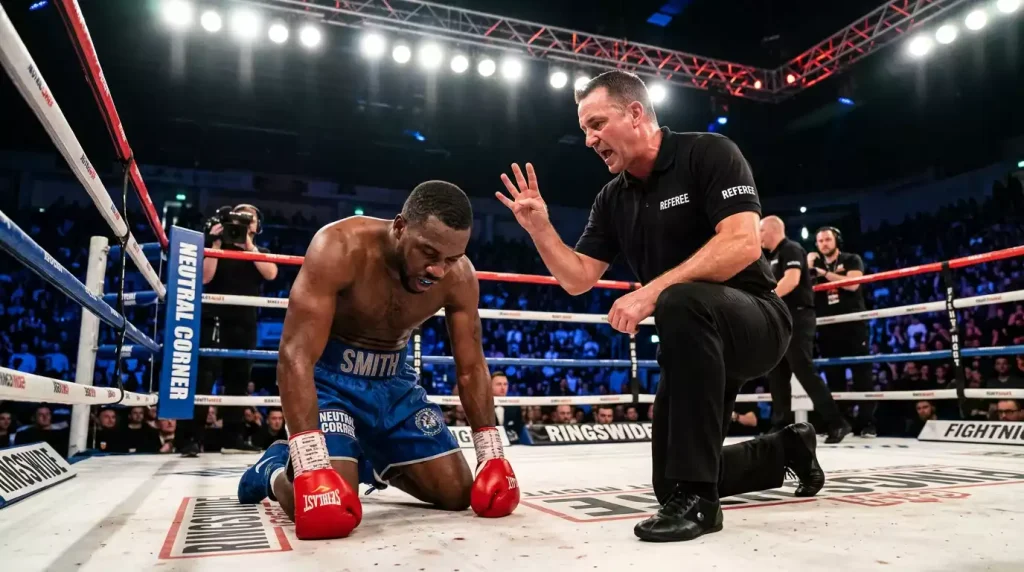
Prop bets are where boxing betting gets interesting — and where bookmakers occasionally get sloppy. The main markets on any fight receive sharp attention: moneyline, round betting, over/under. Pricing is tight. But when you move into proposition markets — will there be a knockdown, will a point be deducted, which round will the first knockdown occur — you enter territory where the bookmaker’s models are thinner and the casual bettor rarely ventures. I have found some of my best value bets in prop markets over the past nine years, and this guide explains the landscape.
Types of Boxing Prop Bets
The online gambling sector in the UK generated 7.8 billion pounds in gross gambling yield last year, with boxing contributing a growing share of that figure. As the market expands, bookmakers add more granular markets to capture betting volume, and props are the fastest-growing category in combat sports.
The most common boxing prop is the knockdown market: will there be a knockdown during the fight, yes or no? This is a binary bet with odds typically ranging from even money to 2/1 depending on the fighters’ power profiles. Related markets include “total knockdowns over/under 1.5” and “which fighter scores the first knockdown.” Each of these requires different analysis — the total knockdowns market needs you to assess both fighters’ power and chin durability, while the first knockdown market is directional.
Point deduction props ask whether the referee will dock a point from either fighter. These are rarer markets, offered mainly on high-profile fights, and the pricing tends to be generous because bookmakers have limited data on referee tendencies in specific matchups. If you know the assigned referee and their history of deducting points — some referees are aggressive on holding, others tolerate headwork that others would penalise — you have information the average bettor does not.
Novelty props occasionally appear on mega-events: will the fight end in a draw, will a fighter be knocked down in the first round, will the fight end by disqualification. These carry long odds and high margins, but they are worth monitoring because the bookmaker’s model is weakest on low-probability events. A disqualification at 33/1 sounds absurd until you remember that the fight features two aggressive infighters with a combined history of fouls.
Fight-specific props also include “will the fight go the distance,” which overlaps with the over/under market but is priced as a yes/no proposition rather than a rounds line. The pricing can differ from the over/under market on the same fight, creating occasional arbitrage opportunities — or at least an indication that the bookmaker’s models are not perfectly aligned across their own markets.
How Bookmakers Price Boxing Props
Here is something most bettors do not realise: bookmakers do not model every prop market with the same rigour. Main markets — moneyline, method of victory, over/under — are priced by specialist traders using fight-specific data, historical matchup analysis, and real-time money flow. Prop markets, especially on undercard fights, are often priced by more generic algorithms that lean on historical averages rather than fight-specific factors.
The General Betting Duty in the UK sits at 15% of a bookmaker’s net profit, which means operators need their markets to generate margin. On props, that margin is typically wider than on main markets — you might see an overround of 115% to 120% on a knockdown market compared to 105% to 108% on the moneyline. That wider margin is the price of entry, but it does not eliminate value. It means the value needs to be larger to overcome the tax, but when it exists, the bookmaker is less likely to notice and adjust because prop markets receive less scrutiny from sharp bettors.
I pay close attention to how quickly prop odds move in the days before a fight. On main markets, odds shift constantly as money arrives. On props, the odds often sit untouched for days because the volume is low. That illiquidity works both ways — it means the opening price is more likely to be inaccurate, but it also means you cannot always get the size you want if you are betting large. For most recreational and semi-professional bettors, the size constraint is irrelevant. The inaccuracy of opening prices is the opportunity.
When Prop Bets Offer Genuine Value
Josh Nagel, the combat sports editor at SportsLine, pointed out ahead of a recent heavyweight bout that the combined knockout rate of both fighters exceeded 90%, which led his analysis toward the under on total rounds. That kind of fighter-specific data — knockout rate, knockdown frequency, rounds averaged per fight — is precisely what makes prop markets exploitable. The bookmaker’s opening line on “will there be a knockdown” might be priced at even money, but if both fighters score knockdowns in over 60% of their bouts, the true probability is significantly higher.
Value in props peaks in three situations. The first is when both fighters have extreme stylistic tendencies — two power punchers, two volume fighters, two defensive technicians. Extreme styles produce extreme outcomes, and the bookmaker’s generic pricing model underweights extremes because it blends toward historical averages.
The second situation is high-profile fights where the public’s attention is on the moneyline. Casual bettors do not engage with props, so the money on the knockdown or point deduction market is thin. Thin markets are inefficient markets.
The third situation is fights involving fighters with long injury histories or known physical limitations. A fighter recovering from a hand injury, for example, may be less likely to score a knockout but equally likely to win by decision. The moneyline might be priced correctly, but the method of victory prop and the over/under market might not fully reflect the injury’s impact on fight dynamics.
For a look at how to combine prop selections into a single wager, the boxing bet builder guide covers structuring multi-market bets and avoiding correlated selection traps.
Props as a Testing Ground for Sharper Analysis
Even if you never place a prop bet for real money, building a prop model for each fight sharpens your overall boxing analysis. When you force yourself to estimate the probability of a knockdown, a point deduction, or a specific round of stoppage, you are drilling deeper into fight dynamics than you would for a simple moneyline pick. That depth improves every other bet you place. I started tracking my prop estimates in a spreadsheet three years ago, and the exercise of thinking through specific fight scenarios has made my moneyline and round betting significantly more accurate.
Articles

Created by the "RINGWAGER" editorial team.
