
Bet Boxing UK: The Complete Guide to Boxing Betting
 Available in US
Bet boxing and you're stepping into a market worth an estimated $4.5 billion globally — a figure that's climbing at roughly 8.1% year on year. I've spent over nine years analysing odds, tracking line movements, and watching the UK betting landscape evolve from high-street slips to mobile-first platforms. In that time, one thing hasn't changed: boxing remains the purest betting sport there is. Two fighters, one ring, a finite number of rounds. No teammates to mask a weakness, no weather delays, no squad rotation. Every variable sits in front of you, waiting to be weighed.
The UK sits at the heart of this market. Total gross gambling yield across the British industry hit £16.8 billion in the financial year to March 2025 — a 7.3% jump on the prior year — and remote betting continues to eat into the retail share. Boxing occupies a unique corridor within that ecosystem: fewer events than football or horse racing, but each card concentrates massive liquidity into a handful of outcomes. A single heavyweight title fight can generate more individual bet slips in a weekend than some sports manage in a month.
This guide covers every layer of boxing betting in the UK — from odds formats and market types through to strategy foundations, regulation, and the numbers behind the industry. I've structured it to work whether you're placing your first moneyline wager or refining how you price a round-group market. Each section functions as a standalone briefing, but together they build a complete framework for understanding how money moves in and around the ring.
What I won't do is sell you a system or point you to a "guaranteed winner." I will give you the data, the mechanics, and the strategic thinking that separates informed punters from the crowd throwing cash at a favourite because a promoter shouted loudly enough. Let's get into it.
What This Guide Covers at a Glance
- Boxing betting in the UK operates within a £16.8 billion regulated industry, with the global boxing market alone valued at $4.5 billion and growing at 8.1% annually.
- Understanding odds as implied probability — not just potential payout — is the foundational skill separating informed bettors from casual punters.
- Core markets range from simple moneyline wagers to high-value round betting and prop bets, each rewarding different analytical strengths.
- Strategy starts with fighter analysis, bankroll discipline, and value identification — betting on mispriced odds, not on predicted winners.
- UK regulation tightened in 2025 with a statutory 1.1% gambling levy and new player protection measures — know the framework before you stake.
How Boxing Betting Works in the UK
A mate of mine placed his first boxing bet in 2018 — a tenner on Anthony Joshua by knockout. He won, felt like a genius, and proceeded to lose the next six bets in a row because he had no idea how the underlying mechanics actually worked. He was guessing at odds, ignoring market structure, and treating every fight like a coin flip with a punchy name attached. That's the trap, and the way out starts here.
Boxing betting in the UK operates through operators licensed by the UK Gambling Commission under the Gambling Act 2005. Every bookmaker legally offering boxing markets to British punters holds a UKGC licence, which means they're bound by specific rules around transparency, fair settlement, and player protection. Around 10% of the UK adult population actively places online sports bets, and approximately 290 million online wagers land every single month across all sports. Boxing's share of that volume spikes dramatically around marquee cards — think unification bouts, grudge matches, and the growing slate of crossover events.
UKGC licensing context: A licensed UK bookmaker must display its licence number, offer self-exclusion tools, segregate customer funds, and settle bets according to published rules. If a site doesn't show a UKGC licence, it's not legally permitted to accept bets from UK residents. Always verify before depositing.

The basic transaction is straightforward: you select an outcome, decide your stake, and the bookmaker's odds determine your potential return. But boxing adds layers that most team sports don't. In football, you're broadly choosing between three outcomes — home win, draw, away win. In boxing, the outcome tree branches into dozens of possibilities: which fighter wins, how they win, when they win, whether the fight goes the scheduled distance, and increasingly, micro-events within individual rounds.
Moneyline — the simplest boxing bet. You pick the fighter you believe will win the bout outright, regardless of method or round. The odds reflect the bookmaker's assessment of each fighter's probability of winning.
Odds — the price attached to an outcome. In the UK, odds are most commonly displayed in fractional format (e.g. 5/2), though decimal and American formats are available on most platforms. Odds encode both probability and potential profit.
Stake — the amount of money you place on a bet. Your potential return equals the stake multiplied by the odds (in decimal format) or calculated through the fractional formula.
Andrew Rhodes, Chief Executive of the UK Gambling Commission, noted that online betting follows the pattern of large marquee events and that racing saw an uptick in participation recently, with GGY tracking along with results. Boxing fits this model precisely. The sport doesn't generate daily fixtures like football or racing — it operates on an event-driven calendar. A Tyson Fury card, a Deontay Wilder rematch, or an emerging domestic rivalry between two unbeaten prospects can shift betting volumes in a way that a midweek League One match simply cannot.
The event-driven nature creates a distinct rhythm for boxing bettors. You have weeks — sometimes months — of lead time before a fight. That window is where serious analysis happens: studying fight footage, tracking training camp reports, monitoring odds movements from the moment a bout is announced to the final hours before the opening bell. Unlike horse racing, where you might have twenty minutes between card publication and the off, boxing gives you a prolonged information-gathering phase. The punters who use that time well are the ones who consistently find value.
One structural difference worth understanding early: boxing odds are set by traders who factor in public money flow, not just statistical models. A fighter with a massive social media following will attract disproportionate casual money, which can compress odds on the favourite and inflate the price on the opponent. This creates opportunities for anyone willing to look past the noise. I've built a significant portion of my long-term profit from exactly this dynamic — reading where the public money is going and asking whether the price on the other side is too generous.
If you're starting from scratch, the path is: understand odds formats, learn the core markets, then build a framework for evaluating fighters and identifying value. The sections that follow cover each stage in detail.
Boxing Odds: A Quick Overview
I once watched a grown man stare at a betting slip for a full minute, trying to work out whether 11/4 was better than 3.75. He was holding the same bet in two different formats and didn't realise it. Odds literacy is the entry ticket to boxing betting — without it, you're flying blind on every decision you make.
UK bookmakers default to fractional odds, the format most British punters grew up with. A price of 5/2 means for every £2 you stake, you receive £5 in profit if the bet lands, plus your original stake back — £7 total return on a £2 bet. Decimal odds express the same information differently: 5/2 fractional converts to 3.50 decimal, meaning a £10 stake returns £35. American odds, common on US sportsbooks, use positive and negative numbers relative to £100 — useful to know if you're comparing international lines, but not the native UK format.
| Format | Fighter A (Favourite) | Fighter B (Underdog) |
|---|---|---|
| Fractional | 4/9 | 5/2 |
| Decimal | 1.44 | 3.50 |
| American | -225 | +250 |
The conversion that actually matters for betting decisions is odds to implied probability. This tells you what chance the bookmaker is baking into the price. The formula for fractional odds is: denominator / (denominator + numerator) x 100. So 5/2 implies a 28.6% probability. If your own analysis suggests the underdog wins 35% of the time, you've found a gap worth exploiting — and that gap is the entire foundation of value betting.
Converting 5/2 to implied probability
Fractional odds: 5/2
Step 1: Decimal conversion — (5 / 2) + 1 = 3.50
Step 2: Implied probability — 1 / 3.50 = 0.2857
Step 3: Express as percentage — 0.2857 x 100 = 28.57%
The bookmaker prices this fighter with roughly a 28.6% chance of winning. If you assess the true probability at 35% or higher, the bet carries positive expected value.
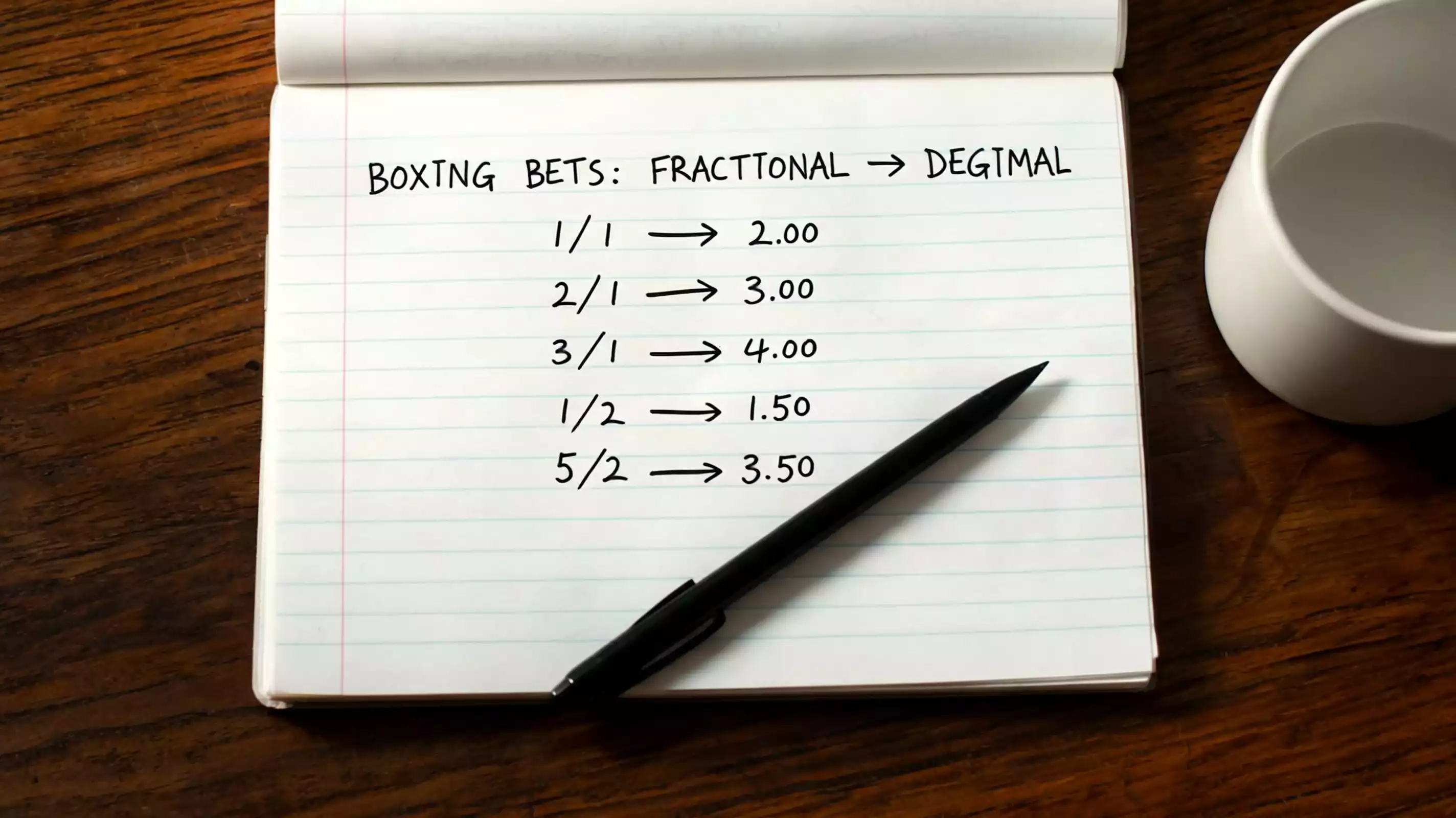
Around 76% of 18-to-24-year-olds in the UK use their mobile phone as their primary gambling device. Most modern betting apps let you toggle between fractional, decimal, and American formats with a single tap — which means you can work in whichever system feels most intuitive and switch when comparing international lines. I personally default to decimal for quick mental maths on accumulators and fractional for single-fight analysis, but the format is a preference, not a strategy.
The deeper mechanics of odds — how overrounds work, why lines move, and what drives price adjustments in the hours before a fight — deserve their own treatment. I've covered the full breakdown, including worked examples with real-world numbers, in the dedicated boxing odds explained guide. For now, the key takeaway is this: if you can't convert odds to probability in your head, you're not ready to assess whether a price is sharp or soft. Master this conversion and the rest of your betting framework has a foundation to stand on.
Core Boxing Betting Markets
The first boxing bet I ever placed was a moneyline on David Haye. The second was a round-group punt that came in at 7/1 and taught me more about boxing markets in one evening than a month of reading could have. UK remote betting generates approximately £2.4 billion in gross gambling yield annually, and boxing markets account for sharp spikes on event weekends. Here's what you're actually choosing between when you open a betting slip.
Moneyline
Pick the winner. That's it. The moneyline is the most heavily traded boxing market and the one most beginners start with. Odds reflect each fighter's assessed probability, with the favourite carrying shorter odds and the underdog offering a higher return. The simplicity is deceptive — pricing a moneyline correctly requires evaluating everything from stylistic matchups to recent activity levels, and the margin between a fair price and a bad one can be razor-thin at the top end of the sport.
Round Betting
Predict the exact round in which the fight ends. This is a high-risk, high-reward market — odds on any individual round typically range from 10/1 to 40/1 depending on the fight profile. Grouped round betting softens the volatility by letting you select a cluster (rounds 1-3, 4-6, 7-9, 10-12), reducing the price but improving your strike rate. Grouped rounds sit in a sweet spot between the precision of exact-round bets and the broad strokes of a moneyline.
Method of Victory
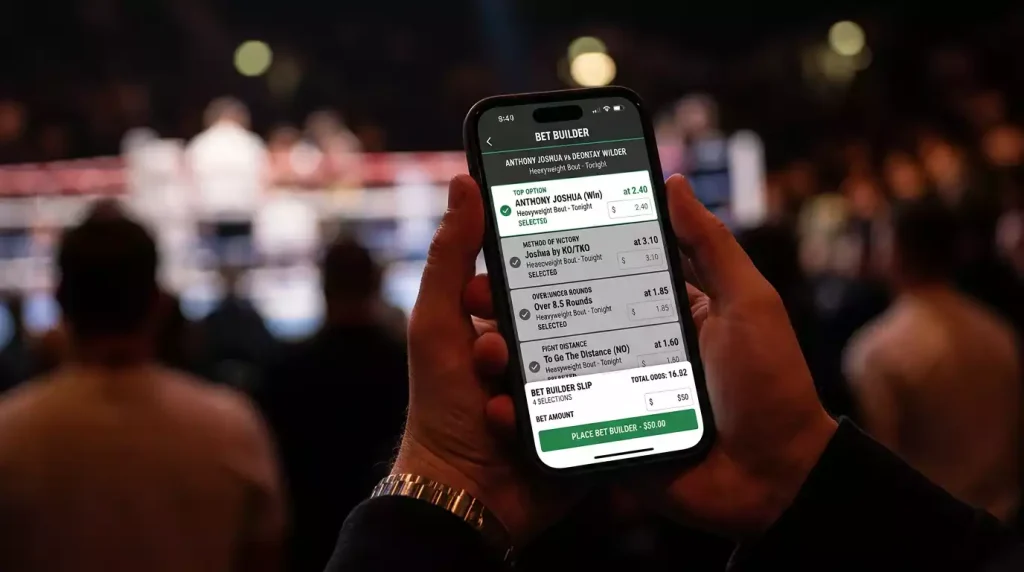
How does the fight end? This market typically offers four to six selections: Fighter A by KO/TKO, Fighter A by decision, Fighter B by KO/TKO, Fighter B by decision, draw, and sometimes technical draw or disqualification. It forces you to commit not just to who wins but to the nature of the fight itself — and that demands a deeper read on both fighters' styles, chins, and stamina profiles.
Over/Under Rounds
The bookmaker sets a line — say, 8.5 rounds — and you bet on whether the fight exceeds or falls short of that number. This market lets you have a view on the fight's duration without committing to a winner. If two power punchers are squaring off, the under might carry value; if two slick technicians are meeting, the over could be the play. Josh Nagel, combat sports editor at SportsLine, pointed out that when both fighters promise nonstop action and their combined knockout rate sits around 90%, the lean towards the under on total rounds becomes hard to ignore.
Go the Distance
A binary yes/no market: will the fight last all scheduled rounds? It's a close cousin of the over/under but strips out the line-setting entirely. If you believe a bout will be a tactical chess match that reaches the scorecards, "yes" at even money or better can carry solid value — especially in lower weight classes where stoppage rates drop significantly.
Prop Bets
Propositions cover everything the core markets don't: will there be a knockdown in round 1, will the fight go to a split decision, will either fighter be deducted a point. Prop markets are thinner, less efficiently priced, and often where sharp bettors find the best edges. They're also where casual money flows most randomly, which is exactly why the prices can be generous.
| Market | What You're Predicting | Typical Odds Range | Risk Level |
|---|---|---|---|
| Moneyline | Winner of the bout | 1/5 to 8/1 | Low to moderate |
| Round betting (exact) | Specific round of stoppage | 10/1 to 40/1 | High |
| Grouped rounds | Round cluster of stoppage | 5/2 to 12/1 | Moderate to high |
| Method of victory | Winner + how they win | 6/4 to 10/1 | Moderate |
| Over/under rounds | Total rounds above/below a line | 4/5 to 11/10 | Moderate |
| Go the distance | Does fight reach the scorecards | 4/5 to 6/4 | Low to moderate |
| Props | Specific in-fight events | 2/1 to 25/1 | Varies |

Accumulator — a single bet combining multiple selections across different fights (or different markets on the same card). All selections must win for the bet to pay out. The odds multiply, creating larger potential returns but lower probability of success.
Each of these markets rewards different analytical skills. Moneylines test your overall fight-reading ability; round bets test your sense of timing and pace; method of victory tests your understanding of style matchups. I've put together a full deep-dive on every market type, including accumulators, bet builders, and settlement rules, in the boxing betting markets guide.
Ringwager proprietary tool
The Fight Shape Engine
The moneyline and the go-the-distance market are not independent — together they already define the entire method-of-victory grid. Feed both in, and the engine strips out each overround, rebuilds the grid they imply, and shows you the band of stoppage splits those prices will actually tolerate.
These three markets agree with one another. The grid below is the method-of-victory book those prices already imply — compare it against what your bookmaker is actually offering.
- Fighter A by KO/TKO45.5% Fair price6/5 Edge —
- Fighter A on points22.0% Fair price7/2 Edge —
- Draw or technical draw4.6% Fair price20/1 Edge —
- Fighter B on points16.5% Fair price5/1 Edge —
- Fighter B by KO/TKO11.4% Fair price8/1 Edge —
How to read the band: the split cannot push a fighter's stoppage share above his own win probability, so the coherent band is set by the shorter of those two ceilings. If a bookmaker's method-of-victory grid only works at a split outside that band, one of the three markets is mispriced relative to the other two — and that is the line worth attacking. Fair prices are rounded to the nearest standard fractional step. Informational only, 18+, and no model replaces watching the tape.
Choosing a Boxing Bookmaker in the UK
Fifteen years ago, there were nearly 7,100 licensed betting shops in Britain. Today that number sits at 5,825 — a decline of 17.8% in a decade — and the direction is clear. The action has moved online. Jason Davies, Data Analytics Manager at the UK Gambling Commission, highlighted that the rise in overall industry revenue has been driven largely by online gambling, which jumped by more than £900 million to reach an annual GGY of £7.8 billion. For boxing bettors, this shift means your choice of online bookmaker matters more than ever.
Market depth
Does the bookmaker offer round betting, method of victory, grouped rounds, props, and bet builders on boxing — or just a basic moneyline?
Odds competitiveness
Compare the same fight across three or four sites. Even a small difference in fractional odds — 5/2 vs 11/4 — compounds over hundreds of bets.
Live streaming and in-play
Can you watch the fight through the platform? Integration of live streaming into bookmaker platforms has increased user engagement metrics by 25%. Access to a stream while betting in-play is a tangible edge.
UKGC licence and settlement clarity
Non-negotiable. Check the licence, read the boxing-specific settlement rules (especially around retirements and no contests), and confirm player protection tools are accessible.
I'm deliberately not ranking specific operators here, and that's a conscious choice. Rankings date themselves within weeks, promotional offers rotate constantly, and what matters to a casual punter placing a fiver on a heavyweight card is completely different from what matters to someone running a systematic value-betting approach across twelve-fight cards. What I can tell you is how to evaluate any bookmaker against the criteria that actually affect your bottom line.
Market depth is the first filter. Some UK-licensed operators treat boxing as an afterthought — they'll price the main event moneyline and ignore the undercard entirely. Others offer full round-betting grids, method of victory, props, and bet builders across every televised bout. If you're serious about boxing, you need a bookmaker whose traders take the sport seriously too. Check the market range on a mid-tier card, not just on a blockbuster PPV. That tells you everything about how the operator prioritises boxing.
Odds competitiveness is where long-term profit lives. The difference between 5/2 and 11/4 on the same fighter is the difference between a £25 return and a £27.50 return on a tenner. Over a year of active betting, those margins stack up to hundreds of pounds. Line shopping — holding accounts with multiple operators and placing each bet at the best available price — is the single simplest edge a bettor can give themselves. It requires no analytical skill whatsoever, just discipline and an extra two minutes per bet.
The broader selection criteria, including mobile experience, deposit and withdrawal options, and how individual operators handle boxing-specific promotions, are covered in the full best boxing betting sites UK comparison.
Boxing Betting Strategy: Where to Start
Here's a number that shaped how I think about the boxing betting audience: 15% of men in the UK bet on sport, compared to just 4% of women. That's a heavily skewed demographic pouring money into a market where emotion — loyalty to a hometown fighter, excitement from a press conference, hype from a social media feud — routinely overrides analysis. The gap between emotional betting and analytical betting is where profit lives. Every strategy I use starts from that principle.
Fighter research is the foundation, and it goes far beyond checking a win-loss record. A record of 24-0 means very little if 20 of those wins came against opponents with losing records. What matters is the quality of opposition, the style matchups involved, and how a fighter has performed when tested — backed up against the ropes, cut, hurt, or dragged into deep waters. I spend more time watching full fights on replay than I do reading previews. A preview tells you what someone else thinks. Tape tells you what actually happened.
Do
- Watch at least three recent full fights for each fighter on a card you're betting. Focus on how they respond under pressure, not just their highlight reel.
- Check the activity gap — a fighter returning after 14 months off is a different proposition to one who fought eight weeks ago.
- Compare odds from multiple bookmakers before placing a bet. The extra two minutes of line shopping pay for themselves over time.
- Set a bankroll and unit size before the card starts. Decide your stakes cold, not while adrenaline is running.
- Track every bet you place — outcome, odds, stake, reasoning. Without data on your own performance, you're guessing at what works.
Don't
- Bet on a fighter because of their social media following or promotional presence. Public hype compresses odds; it doesn't predict outcomes.
- Chase losses by increasing stakes after a losing bet. This is the single fastest route to blowing a bankroll.
- Ignore weight class dynamics — a heavyweight underdog with one-punch power is a fundamentally different proposition to a featherweight underdog relying on speed.
- Assume that a fighter's last performance predicts their next one. Styles make fights, and a new opponent means new variables.
- Place bets on fights you haven't researched because "the card looks good." Every bout deserves its own analysis or no money at all.
Bankroll management is where most bettors fail before they even start. The concept is simple: decide how much money you're prepared to dedicate to boxing betting over a given period, divide it into units (typically 50-100 units), and stake a fixed number of units per bet based on your confidence level. A standard bet might be 1-2 units; a high-confidence play might stretch to 3. Never more. The maths protects you from variance — even a strong bettor will hit losing streaks, and without a structured bankroll, a losing streak becomes a wipeout.
Pre-fight analysis checklist
- Review both fighters' records against common or comparable opponents
- Watch recent fight footage — minimum three bouts per fighter
- Assess style matchup: pressure vs counter-puncher, volume vs power, southpaw vs orthodox
- Check for injuries, layoff periods, trainer changes, or weight-class moves
- Convert bookmaker odds to implied probability and compare against your own assessment
- Determine stake size based on your bankroll unit system and confidence rating
- Compare odds across at least three UKGC-licensed operators before placing
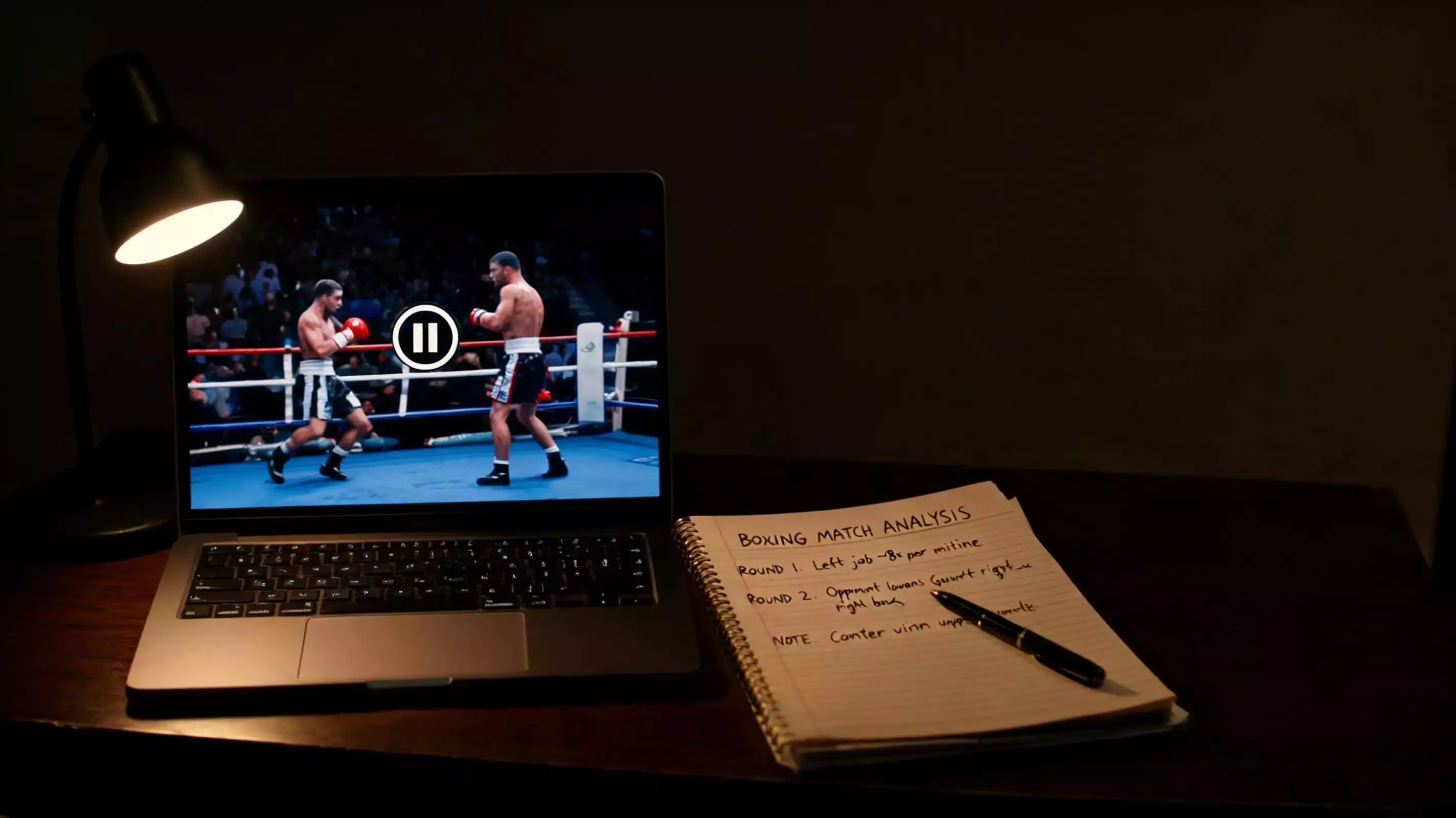
Value identification is the concept that separates recreational bettors from profitable ones. A bet has positive expected value when your assessed probability of an outcome exceeds the implied probability in the bookmaker's odds. If you believe a fighter has a 40% chance of winning and the odds imply only 28%, you've found value — even though the fighter is more likely to lose than win. Betting on value, not on winners, is the mindset shift that changed my results permanently.
These are foundations. The full strategic framework — including the Kelly criterion adapted for boxing, weight-class-specific approaches, and underdog identification methods — is laid out in the boxing betting strategy guide.
Live Boxing Betting: Round-by-Round Action
The moment that converted me to live boxing betting wasn't a knockdown — it was a body shot in round four that the commentators barely noticed. The fighter who took it started holding more, throwing fewer jabs, leaning on the ropes between exchanges. Within sixty seconds the in-play moneyline shifted two full points. I had a bet placed before the bell rang for round five. Live boxing betting rewards attention to detail that pre-fight markets simply can't capture.
In-play boxing works differently from live football or tennis betting. Between rounds, bookmakers suspend and reprice markets based on what just happened: knockdowns, visible damage, referee warnings, corner instructions. The window to act is narrow — typically twenty to forty seconds while odds are live between rounds, then another suspension once the next round begins. Integration of live streaming directly into bookmaker platforms has driven a 25% increase in user engagement metrics, and for good reason: watching the fight through the same app where you're betting eliminates the latency of switching between a broadcast and a betting screen.
How in-play boxing betting works: Markets open between rounds and during natural stoppages (referee counts, injury assessments). Odds adjust based on round-by-round action, with knockdowns triggering the sharpest movements. Most UK bookmakers offer moneyline, next-round stoppage, and total rounds markets in-play. Round betting and method of victory are typically suspended once the fight begins.
The edge in live boxing betting comes from reading the fight more accurately than the traders adjusting the odds. That sounds like a tall order, but consider this: bookmaker traders are pricing dozens of events simultaneously. You're watching one fight with full concentration. If you've studied both fighters' patterns, you'll notice things the algorithm and the generalist trader might miss — a fighter switching stance to protect an injured hand, a cut developing that hasn't been scored yet by the commentary team, or a pace change that signals a shift in strategy from the corner.
The flip side is that live betting amplifies every behavioural trap in the book. The urge to chase a losing pre-fight bet by doubling down in-play, the adrenaline-fuelled impulse to back a fighter after one flashy combination, the frustration of missing a window by seconds — all of these hit harder when the fight is unfolding in real time. I treat live betting with a separate, smaller bankroll and pre-commit to a maximum number of in-play bets per card. That structure keeps the decision-making analytical rather than emotional.
Live markets connect directly to the broader industry picture — the technology driving real-time odds, the platforms streaming fights, and the regulatory framework governing how quickly bookmakers must settle in-play wagers. The next sections cover the market's scale and the rules shaping it.
The full tactical breakdown — including round-by-round strategies, momentum-reading techniques, and the timing pitfalls that catch even experienced bettors — is in the dedicated live boxing betting guide.
The UK Boxing Betting Market in Numbers
Most boxing betting guides skip the numbers entirely. They tell you what a moneyline is but not how large the market is, how fast it's growing, or where the money actually flows. I find that baffling — understanding the size and shape of the market you're operating in is as fundamental as understanding the odds on a slip. So here are the figures that none of my competitors bother to share.
The global boxing betting market was valued at an estimated $4.5 billion in 2024, with projections pointing to growth at a compound annual rate of 8.1% through to 2033. That's not a niche — that's a multi-billion-dollar industry expanding at nearly double the rate of GDP.
The broader global online gambling market was worth approximately $63 billion in 2022, growing at an estimated 11.5% annually through 2030. Boxing sits within that wider current, benefiting from the same mobile-first, streaming-integrated trends pushing the whole sector forward.
Within the UK specifically, the total gross gambling yield across all sectors hit £16.8 billion for the financial year ending March 2025 — a 7.3% increase on the prior year and the highest figure ever recorded. Andrew Rhodes, the Gambling Commission's Chief Executive, confirmed that total GGY had reached its highest ever level, with participation remaining stable at around 48% of the adult population. That stability is important: it means the revenue growth is coming from higher spend per bettor and channel migration (retail to online), not from a surge of new gamblers entering the market.
The online segment tells the sharper story. Remote casino, betting, and bingo generated £7.8 billion in GGY — a 13.1% year-on-year increase that now accounts for 46% of the entire UK market. Remote sports betting alone contributed £2.4 billion, with football at £1.1 billion and horse racing at £771 million leading the discipline breakdown. Boxing doesn't get its own line item in the UKGC's published data, but industry sources consistently place it in the top five for per-event betting intensity alongside football, racing, tennis, and cricket.
UK total GGY
£16.8 billion (FY 2024/25) — all-time high, up 7.3% year on year
Online GGY
£7.8 billion — 46% of the total UK market, growing at 13.1%
UK market size projection
£17.2 billion in 2026 across 914 companies, with online sports betting projected to reach $21.3 billion by 2030 at 11.4% CAGR
Tax revenue
£982 million collected in Q1 FY 2025/26 — up £98 million (11%) on the same quarter the year before

The UK online gambling sector is projected to grow at a CAGR of 12.8% through 2030 — the highest rate in Europe. That growth trajectory means more operators competing for boxing bettors, deeper markets, tighter odds on popular fights, and more promotional spending around major cards. For punters, competition among bookmakers is unambiguously positive: it drives better prices, wider market ranges, and more generous onboarding offers.
What the raw numbers don't capture is boxing's liquidity profile. Unlike football, which spreads volume evenly across the season, boxing concentrates handle into spikes around major cards. A single Canelo Alvarez event or a domestic grudge match between unbeaten Brits can generate weekend handle that dwarfs an entire month of lower-profile sports. That concentration means deeper markets and tighter odds on big cards — but significantly thinner pricing on quieter weeknight events, which is where patient bettors often find the most mispriced lines.
UK Regulation: What Bettors Should Know
I once had a payout delayed by eleven days because the bookmaker I'd used turned out to be licensed in Curacao, not by the UKGC. The dispute process was non-existent, the customer service was a chatbot loop, and I eventually got my money only after threatening a chargeback. That experience taught me something no odds calculator ever could: regulation isn't the exciting part of boxing betting, but it's the part that determines whether your money is protected, whether your bets are settled fairly, and whether the market you're operating in has any integrity at all.
The backbone is the Gambling Act 2005, administered by the UK Gambling Commission. Every operator accepting bets from UK residents must hold a UKGC licence, which imposes obligations around fair settlement, customer fund segregation, responsible gambling tools, and advertising standards. General Betting Duty stands at 15% of bookmaker profits — a rate unchanged since 2002 — and that tax burden is built into the odds you see on screen. When a bookmaker sets a price, the margin already accounts for the 15% the Treasury takes from the operator's end. You don't pay tax on your winnings; the bookmaker pays tax on their margin.
From 1 October 2025, a statutory gambling levy of 1.1% on gross gambling yield applies to all UK-licensed operators. This levy funds research, prevention, and treatment of gambling-related harm, replacing the previous voluntary contributions system. Legal analysis from Clifford Chance described the 2025 reforms as a decisive shift in UK gambling regulation, noting that the introduction of a statutory levy, targeted stake limits, and enhanced consumer protections positions the UK as a global leader in responsible gambling regulation.
The levy matters for bettors because it adds another layer of cost for operators, which can feed through into slightly wider margins on odds. Whether that effect is material depends on the operator's pricing model — larger firms absorb it more easily than smaller ones — but it's worth understanding that the regulatory cost base for UK bookmakers is climbing, not shrinking.
Stake limits on online slots: Since April 2025, maximum stakes on online slot games are capped at £5 per spin for players aged 25 and over, and £2 for players aged 18-24. These limits don't apply directly to sports betting, but they signal the regulatory direction — tighter controls on high-frequency, high-intensity gambling products. It's reasonable to expect scrutiny on sports betting structures to increase in the coming years.
For boxing bettors specifically, the regulatory framework means that any UKGC-licensed operator must publish clear settlement rules for boxing markets — covering scenarios like retirements between rounds, corner stoppages, disqualifications, and no contests. Before you place a bet on any boxing market, check the bookmaker's boxing-specific rules page. I've seen disputes arise from bettors not understanding how a particular operator settles a "method of victory" bet when a fight ends via technical decision. Those rules are there; read them.
The broader regulatory landscape — including how the UKGC handles match-fixing investigations in boxing and what player protection tools operators must provide — continues to evolve. Understanding the framework doesn't make you a better handicapper, but it protects you from putting money into a system you don't fully understand.
Responsible Gambling and Boxing
I've watched sharp, intelligent people lose control of their betting. Not because they were bad at analysis — some of them were genuinely skilled handicappers — but because the emotional intensity of boxing creates unique pressure points that other sports don't replicate. A twelve-round fight unfolds over thirty-six minutes of escalating tension. Add money to that experience and the psychological load multiplies in ways that weekly football accumulators simply don't match.
The data confirms the scale of the issue. Approximately 2.7% of the UK adult population — roughly 1.4 million people — experience problems related to gambling. That figure has remained statistically stable compared to 2023, which means the problem isn't growing in prevalence, but it isn't shrinking either. Andrew Rhodes acknowledged that the findings deepen our understanding of consequences from gambling and provide crucial insight into risk profiles among those who gamble most frequently, urging operators to use the evidence to consider the risks within their own customer bases.
If you or someone you know is struggling with gambling, help is available. The National Gambling Helpline (0808 8020 133) offers free, confidential advice 24 hours a day. GamCare provides online support and counselling at gamcare.org.uk. GAMSTOP allows self-exclusion from all UKGC-licensed online gambling sites through a single registration.
Among younger demographics, the numbers demand attention. Thirty percent of young people aged 11-17 spent their own money on some form of gambling in the past twelve months — up from 27% in 2024. That's a three-percentage-point increase in a single year for a group that cannot legally place a bet with a licensed operator. The exposure channels are clear: 49% of young people reported seeing gambling advertising on social media at least once a week. Boxing, which ranks among the top five most popular sports with 18-to-24-year-olds in the UK, sits right in the crosshairs of that overlap between sports engagement and gambling exposure.
Tools available to UK boxing bettors: Every UKGC-licensed operator must offer deposit limits (daily, weekly, monthly), loss limits, session time reminders (reality checks), cooling-off periods (24 hours to 6 weeks), and self-exclusion (minimum 6 months). These tools are accessible through your account settings. Using them isn't a sign of weakness — it's bankroll management by another name.
Boxing's event-driven calendar creates specific risk patterns worth acknowledging. The build-up to a major card generates weeks of media coverage, promotional noise, and social media discussion that can make betting feel inevitable rather than optional. The intensity of the fight itself — especially when money is riding on it — triggers emotional responses that bypass rational decision-making. And the aftermath of a loss can create a chase impulse that's harder to resist when the next card is only days away during a busy schedule. Recognise these patterns in yourself. The most disciplined bettor I know takes a mandatory 48-hour break from all betting after any losing card, regardless of how small the loss. That single rule has probably saved him more money than any strategic edge he's ever found.
Boxing Betting FAQ
How do boxing betting odds work in the UK?
UK bookmakers display boxing odds primarily in fractional format. A price of 5/2 means you receive £5 profit for every £2 staked, plus your original stake back. To convert fractional odds to implied probability, divide the denominator by the sum of both numbers: for 5/2, that's 2 / (5 + 2) = 28.6%. This percentage represents the bookmaker's assessed likelihood of that outcome occurring. Decimal and American formats are available on most platforms and can be toggled in your account settings. Understanding odds as probability — not just payout — is the first step to identifying value in any boxing market.
What are the most popular boxing betting markets?
The moneyline (picking the outright winner) is the most heavily traded boxing market in the UK. Round betting — both exact and grouped — attracts significant volume because of the high odds available. Method of victory, over/under total rounds, and "go the distance" round out the core markets. Proposition bets covering specific in-fight events (knockdowns, point deductions, split decisions) have grown in popularity as bookmakers expand their boxing coverage. Accumulators combining selections across multiple fights on the same card are also widely available, though they carry substantially higher risk.
Is boxing betting legal in the UK?
Boxing betting is fully legal in the UK when conducted through operators licensed by the UK Gambling Commission under the Gambling Act 2005. Licensed operators are required to offer fair settlement terms, provide responsible gambling tools, and segregate customer funds. Betting with unlicensed offshore operators is not protected by UK regulation, meaning you have no recourse if a dispute arises. Always verify a bookmaker's UKGC licence number before opening an account or depositing funds.
Can you bet on boxing live during a fight?
Yes. Most major UK bookmakers offer in-play boxing betting with markets that open between rounds. Available live markets typically include the updated moneyline, next-round stoppage, and total rounds. Odds adjust based on the action in each round, with knockdowns and visible damage triggering the sharpest price movements. Live streaming through the betting platform itself is increasingly common, allowing you to watch and bet through the same app. The key challenge in live boxing betting is the narrow window for placing bets — markets are typically open for only twenty to forty seconds between rounds.
How do I find value in boxing odds?
Value exists when your assessed probability of an outcome is higher than the implied probability in the bookmaker's odds. To find it, convert the odds to implied probability, then compare against your own analysis. If you believe a fighter has a 40% chance of winning but the odds imply only 28%, the bet carries positive expected value. Line shopping — comparing odds across multiple UK bookmakers for the same fight — is the simplest way to improve value on every bet. Beyond that, focus on fights where public money is heavily skewing odds on the favourite, as this tends to inflate the price on the underdog side.
What happens to my bet if a boxing fight is cancelled?
If a fight is cancelled before the first bell, all bets on that bout are typically voided and stakes returned. This applies to cancellations due to injury, failed medicals, or contractual disputes. If a fight is rescheduled to a different date, settlement rules vary by bookmaker — some void bets, while others allow them to stand for the rescheduled date. If one fighter is replaced by a substitute, bets on the original matchup are voided. Always check your bookmaker's specific boxing settlement rules, as there are differences between operators on edge cases like weight-class misses and last-minute opponent changes.
What is the safest type of boxing bet for beginners?
The moneyline is the most straightforward boxing bet: you pick the winner and collect if they win by any method. It removes the complexity of predicting rounds, stoppages, or specific scorecards. For beginners looking to reduce risk further, "go the distance" offers a simple yes/no proposition that doesn't require you to pick the winner at all. Avoid accumulators and exact-round bets until you have a solid understanding of odds, market mechanics, and a defined bankroll management system. The goal for any beginner should be learning the process of analysis and bet placement, not chasing high-odds paydays.
Read also
Written by the editors at RINGWAGER.
