
Understanding Boxing Scoring and How It Shapes Your Betting
 Available in US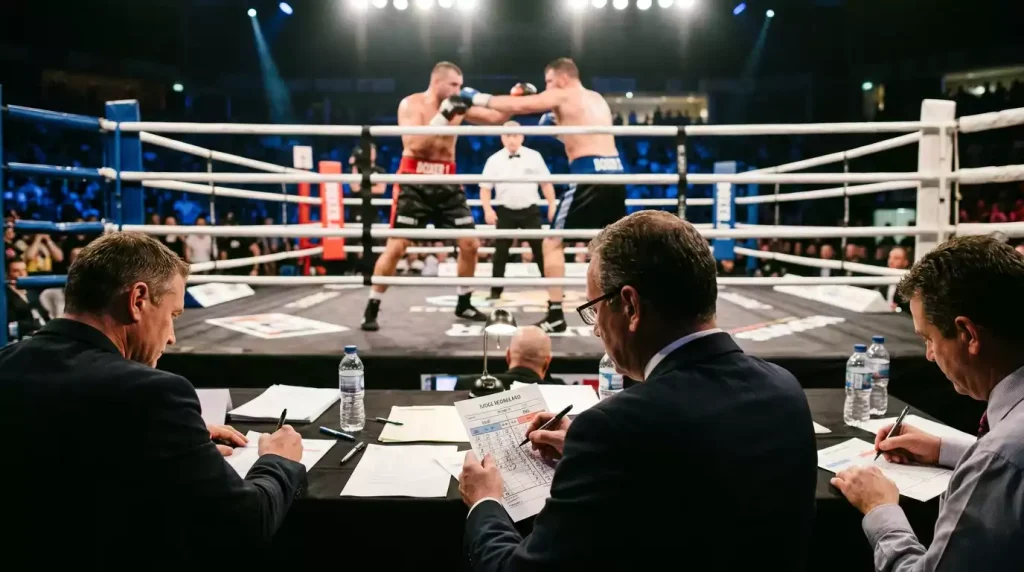
I once watched a fight where the fighter I backed clearly outworked his opponent for twelve rounds — higher punch volume, more combinations, constant pressure. The scorecards came back split against him. Two judges awarded the fight to the counter-puncher who landed fewer but cleaner shots and controlled the centre of the ring. I lost the bet and learned a lesson worth more than the stake: understanding boxing scoring is not optional for bettors. It is the difference between betting on what you think should win and betting on what the judges will actually score. Those are two different questions, and only one of them pays.
The 10-Point Must System Explained
Professional boxing uses the 10-point must system, where the winner of each round receives ten points and the loser receives nine or fewer. A round with a knockdown typically scores 10-8. Two knockdowns in a single round produce a 10-7. A round so dominant that the losing fighter offered virtually nothing might score 10-8 even without a knockdown, though this is rare and judge-dependent. If both fighters perform equally — a genuinely even round — the judges can score it 10-10, though this is discouraged and most judges will find a way to separate the fighters.
Three judges score independently, and the final result is determined by majority. If two judges score for Fighter A and one scores for Fighter B, the result is a split decision for Fighter A. If all three agree, it is unanimous. If two judges score it a draw and one scores for a fighter, the result is a majority draw. The interaction between three independent scorecards creates a layer of uncertainty that most bettors dramatically underestimate. A fight where Fighter A wins eight rounds on your scorecard can still produce a split decision — or even a draw — if two of the judges saw those swing rounds differently.
The UK gambling market processes 290 million online bets each month, and a substantial portion of boxing bets are placed by people who do not understand that their personal scorecard is irrelevant. What matters is the judges’ scorecards, and the judges follow criteria that may differ from what a casual viewer values.
What Judges Actually Score and Why It Differs from What You See
There are four official scoring criteria in professional boxing: clean punching, effective aggression, ring generalship, and defence. They are listed in order of priority, but in practice, individual judges weight them differently. Some judges reward clean punching above all else — the fighter who lands the sharper, more visible shots wins the round regardless of who was busier. Other judges favour effective aggression — the fighter who presses forward and forces the action gets credit even if they land fewer clean shots. Ring generalship — controlling the centre of the ring, dictating the pace, determining where the exchanges happen — is the most subjective criterion and the one most likely to swing close rounds.
I spent a year tracking how three specific judges scored at UK shows. The patterns were illuminating. One judge consistently favoured the aggressor, scoring close rounds for the fighter who pressed forward. Another consistently rewarded counter-punching and defence, scoring close rounds for the fighter who controlled distance and landed cleaner. The third was more balanced but showed a slight bias toward activity — the busier fighter won the round unless the other fighter landed something dramatic. None of these tendencies is wrong. The scoring criteria are vague enough to accommodate all three approaches. But for betting purposes, knowing which judges are assigned to a fight and understanding their tendencies gives you information that the bookmaker’s model does not incorporate.
The global boxing betting market’s 8.1% annual growth is partly driven by expanded data availability, but judge-specific data remains one of the most underexploited datasets in boxing betting. Few bookmakers adjust their decision-market pricing for specific judge assignments, and fewer bettors make the effort to track scoring tendencies at the judge level. The edge is there for anyone willing to do the work.
How Scoring Uncertainty Affects Betting Markets
Every boxing bettor has experienced the agony of a fight that looked like a clear win but came back as a split decision the other way. That experience is not bad luck — it is the structural reality of a sport scored by human observers with different priorities. The 10-point must system compresses rounds into a narrow range, which means a single round scored differently by one judge can flip the entire fight. In a twelve-round bout where eight rounds are clearly won by one fighter and four are swing rounds, the fight outcome depends entirely on how those swing rounds are scored. If one judge gives three of the four swing rounds to the other fighter, a unanimous decision becomes a split.
This scoring compression has direct implications for method of victory betting. The probability of a split decision is much higher than most bettors estimate, particularly in fights between technically matched opponents. I price split decisions separately in my analysis, and I have found that bookmakers consistently underestimate split decision probability by assigning too much weight to unanimous decisions. When two fighters are closely matched in skill and style, something around 30% to 40% of the decision probability should be allocated to split or majority decisions. Most bookmaker models assign closer to 15% to 20%, which underprices the split decision market.
Using Scoring Knowledge to Sharpen Every Bet
Scoring knowledge improves every market you bet, not just the decision line. If you understand that a fighter’s jab-and-move style wins rounds with judges who value clean punching but loses rounds with judges who value aggression, you can adjust your moneyline estimate based on the assigned officials. A fighter with a 60% win probability under aggression-friendly judges might have a 70% win probability under clean-punching judges. That 10% shift changes the value calculus on the moneyline, the method of victory, and the over/under.
The practical application is straightforward. When a fight is announced, check the assigned judges. Research their recent scoring history — which fighters they have favoured, which styles they reward, how they score close rounds. Layer that information onto your fight analysis. If your fighter’s style aligns with the judges’ tendencies, you have additional confidence in the decision line. If the styles conflict, you might shift your focus to the KO/TKO market where the judges become irrelevant, or reduce your stake to reflect the added uncertainty. For practical guidance on how to analyse a boxing fight from multiple angles before placing a bet, the analytical process starts well before the scoring criteria come into play.
Articles

Created by the "RINGWAGER" editorial team.
