
Live Boxing Betting UK: In-Play Strategy and Round-by-Round Timing
 Available in US
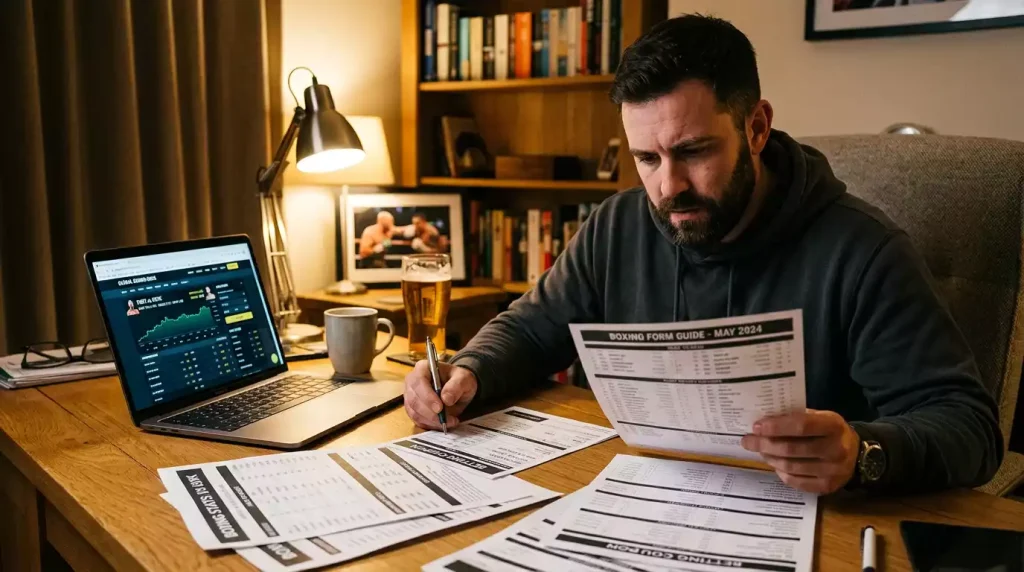
The first time I placed a live boxing bet, I panicked. The odds were shifting every thirty seconds, the round was nearly over, and I had no framework for making a decision under pressure. I backed the wrong fighter at the wrong price because I reacted to what I had just seen rather than what was likely to happen next. That bet cost me forty pounds and taught me something worth far more: live boxing betting rewards preparation, not reflexes. Integration of live streaming into bookmaker platforms has increased user engagement by 25%, which means more people are watching and betting in real time than ever before — but most of them are making the same mistake I made that first night.
How In-Play Boxing Markets Work
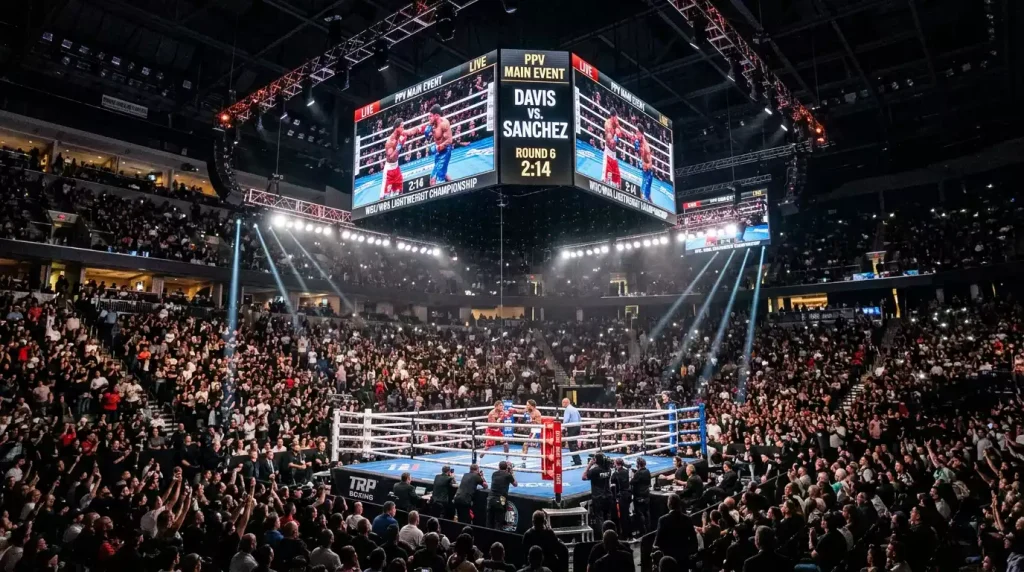
Live boxing markets open between rounds and close when the bell rings. Some bookmakers keep markets open during rounds with a slight delay, but the primary trading windows are the sixty-second rest periods. During those breaks, the bookmaker’s algorithm recalculates the odds based on what just happened — who landed the cleaner shots, whether a knockdown occurred, whether the pace is slowing or increasing. The moneyline shifts, the over/under adjusts, and method of victory prices reprice based on the fight’s trajectory.
The critical thing to understand is that live odds are algorithm-driven with human oversight, not the other way around. The algorithm processes observable events — knockdowns, visible damage, compubox-style punch stats where available — and generates new prices. A human trader monitors for errors and can intervene, but on a busy card with multiple fights, the algorithm does most of the work. This creates opportunities because algorithms are excellent at processing quantitative events but poor at interpreting qualitative shifts in momentum, body language, and tactical adjustment. A fighter who lost the first four rounds but just changed stance and started landing uppercuts is making a tactical shift that an algorithm weights slowly. Your eyes process it instantly.
The UK generates 290 million online bets monthly, and the in-play share of that volume has grown every year for the past decade. Bookmakers have invested heavily in their live pricing engines for football and horse racing, but boxing in-play infrastructure remains less mature. That immaturity is your edge — the pricing is less efficient, the adjustments are slower, and the margins for error are wider than in more liquid live sports markets.
Reading the Fight to Find Live Value
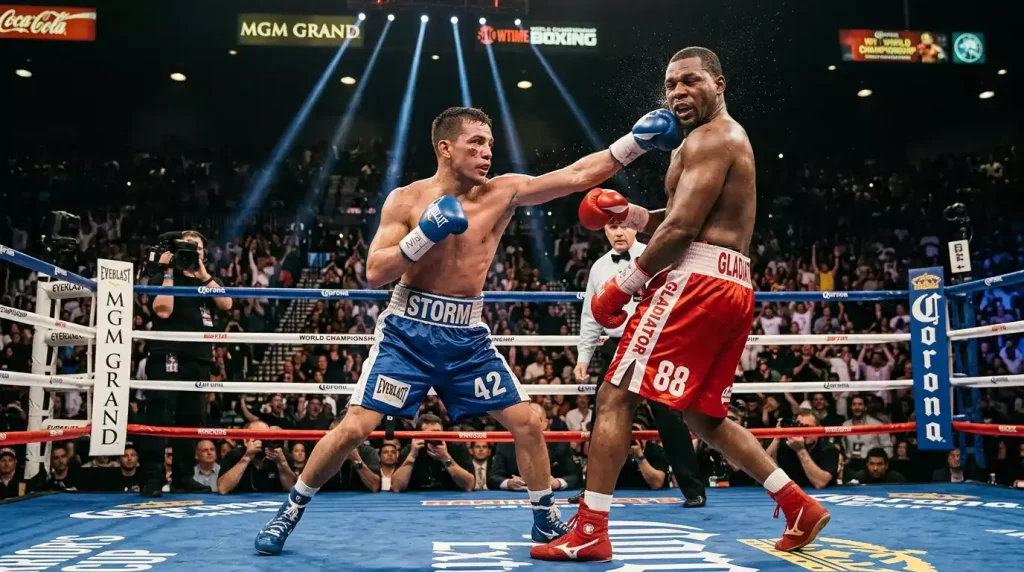
I watched a middleweight fight last autumn where the favourite started beautifully — crisp jab, sharp movement, clean combinations for three rounds. His live price shortened from 4/6 to 1/4 by the end of round three. The crowd was cheering, the commentary was effusive, and every casual viewer assumed the fight was over. What I noticed was different. The favourite’s output dropped in the second half of each round. His breathing was heavy between rounds. His corner was applying ice to both shoulders. The underdog, meanwhile, was absorbing punishment but not slowing down, and his body work was accumulating. By round five, the favourite was visibly fading. I backed the underdog at 5/2, a price that should have been closer to evens. He won by TKO in round eight.
Live value in boxing comes from divergence between what the audience perceives and what the fight dynamics actually indicate. Three specific signals consistently offer exploitable divergence. First, punch output decline — a fighter who threw sixty punches in round one and forty in round three is depleting energy regardless of whether those punches landed. The algorithm adjusts for landed punches but underweights output decline as a fatigue indicator. Second, body language between rounds — how quickly a fighter sits down, whether they are breathing through their mouth, whether their corner is working urgently or calmly. The camera shows this, but the algorithm does not price it. Third, tactical adjustment — when a fighter abandons their pre-fight plan mid-fight, it usually means the original plan is failing. If a boxer switches from boxing at range to fighting on the inside in round four, they are telling you they cannot keep the opponent at distance. That information should change the odds, but it often does not move the live line until the consequences become visible two or three rounds later.
Timing Your Bets Between Rounds
Have you ever noticed how live odds spike immediately after a dramatic round? A knockdown in round six causes a massive swing in the moneyline, often overshooting the correct adjustment. The fighter who scored the knockdown sees their price shorten dramatically, while the knocked-down fighter’s odds drift to long prices. If the knockdown was a flash knockdown — the fighter was up immediately, showed no wobble, and finished the round strongly — the odds overshoot represents value on the knocked-down fighter.
The best timing window for live boxing bets is not during the dramatic moments. It is during the quiet rounds — the rounds where nothing visually exciting happens but the fight dynamics are shifting beneath the surface. A boring round four where both fighters clinch extensively looks like a non-event to the audience, but it might indicate that the favourite’s power is not troubling the underdog, which has significant implications for the later rounds. Live odds barely move during quiet rounds, creating entry points that did not exist during the action-packed early frames.
I follow a personal rule: never bet in the first two rounds of a live fight. Those rounds are information-gathering rounds — for the fighters and for me. The pre-fight odds are still largely intact, the fighters are still fresh, and the sample of data is too small to make meaningful adjustments. From round three onward, I have enough data on pace, power, distance management, and conditioning to make informed live selections. The patience required to sit through two rounds without betting is the hardest part of in-play boxing strategy, and it is also the most valuable discipline.
Managing Risk When the Clock Is Ticking
Live betting amplifies every cognitive bias. Recency bias makes you overweight the last thirty seconds you watched. Confirmation bias makes you look for evidence supporting the bet you want to place. Loss aversion makes you chase a losing pre-fight bet by doubling down in-play. The time pressure between rounds eliminates the cooling-off period that pre-fight betting naturally provides. You have sixty seconds to evaluate, decide, and execute.
My risk management system for live boxing is simple. I set a maximum of two live bets per fight. I predetermine the stake before the fight begins — it is always smaller than my pre-fight stake on the same event. And I write down the specific condition that would trigger each bet before the fight starts. Something like: “If Fighter A shows visible fatigue by round four, back Fighter B on the moneyline at anything above 2/1.” Having predefined triggers prevents reactive betting. When the condition materialises, I execute. When it does not, I watch and enjoy the fight without the urge to bet.
The UK gambling market’s 16.8 billion pounds in annual gross gambling yield includes a growing portion from in-play betting, and operators know that live bettors tend to wager more impulsively than pre-match bettors. The structure of live betting — short windows, shifting odds, visible action — is designed to encourage volume. Your defence against that structure is preparation. For a deeper look at the round-by-round dynamics that inform live betting decisions, understanding how round betting markets price the fight’s timeline will sharpen your in-play analysis considerably.
Articles
Written by the editors at RINGWAGER.
