
How to Analyse a Boxing Fight Before Betting
 Available in US
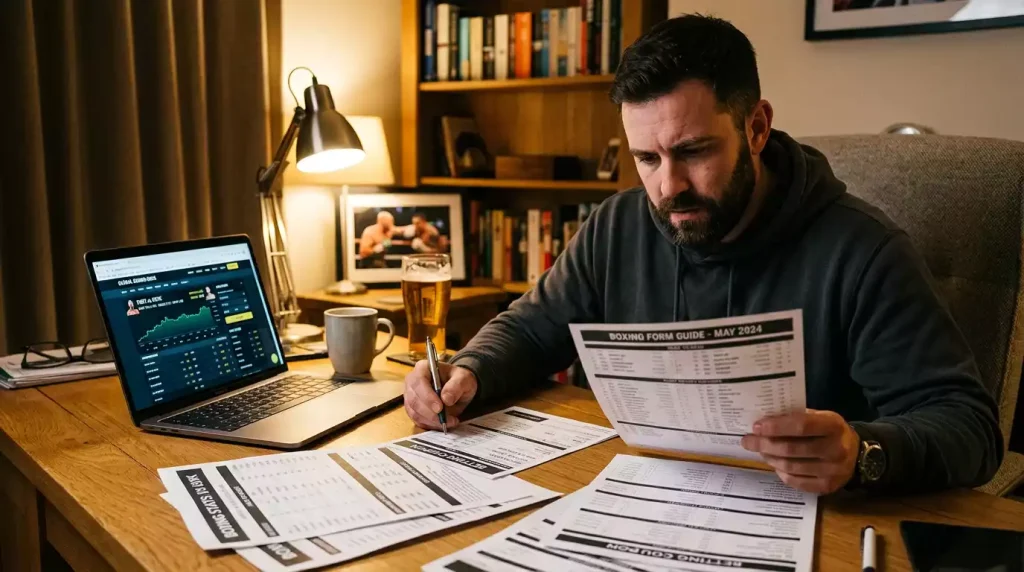
Every profitable boxing bet I have ever placed started with the same process: watch the fighters, study the matchup, build a probability estimate, then compare that estimate to the odds. Not once has a successful bet started with looking at the odds first. The order matters because odds are seductive — they frame the fight in terms of price rather than probability, and price-first thinking leads to backing bets because they look cheap rather than because they are genuinely mispriced. Analysis first, odds second. That discipline has been the foundation of my boxing betting for the better part of a decade.
Film Study: What to Watch and What to Ignore
I watch a minimum of three recent fights for each fighter before placing a bet. Not highlights — full fights. Highlights show you what a fighter does when everything goes right. Full fights show you what they do when things go wrong, when they are tired, when the plan is not working, and when they are in trouble. The rounds between the exciting moments are where the real information lives.
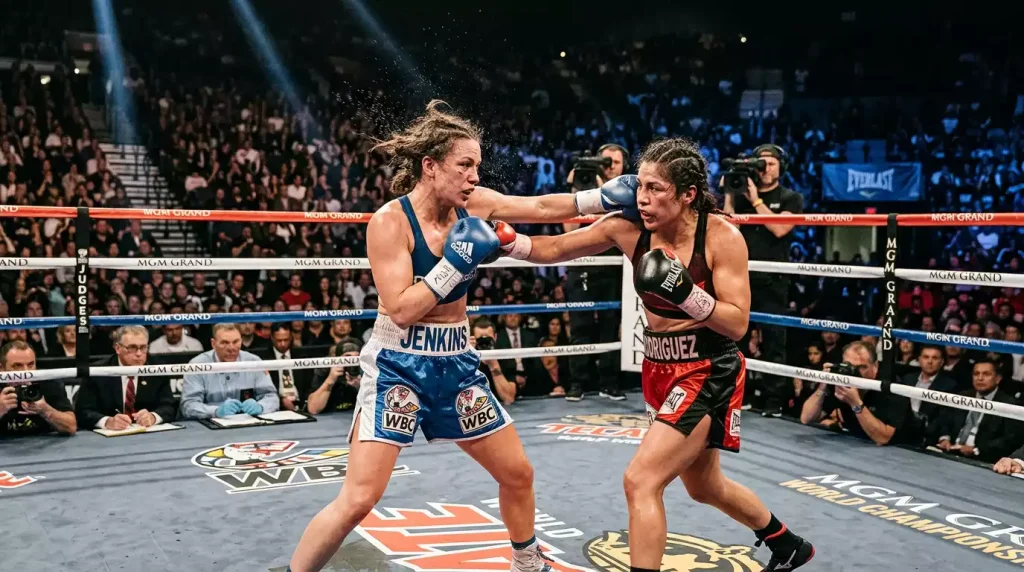
When watching film, I focus on five things. First, the jab. The jab is the most important punch in boxing because it controls distance, sets up combinations, disrupts rhythm, and scores points. A fighter with a reliable jab is harder to beat than a fighter with heavy hands but no jab, because the jab works in every round from first to last. Second, foot position. Does the fighter maintain balance when throwing and receiving punches? A fighter who falls off balance after throwing a right hand is vulnerable to counters. A fighter who keeps their feet under them can recover from exchanges quickly. Third, response to adversity. When a fighter gets hit clean, what do they do? Grab, move, fire back, freeze? The response pattern tells you how the fighter handles trouble, which directly affects your stoppage probability estimates.
Fourth, I watch for patterns in combination selection. Most fighters have two or three combination sequences they default to under pressure. Once you identify those sequences, you can predict how the fighter will respond in specific situations — and more importantly, you can assess whether the opponent’s defensive tendencies create openings for those combinations or shut them down. Fifth, conditioning. Watch the last three rounds of a fighter’s recent fights. Are they maintaining output? Is their footwork deteriorating? Are they leaning on the ropes more in the championship rounds? Conditioning data from the late rounds of recent fights is the best predictor of how a fighter will perform in the second half of the current fight.
Style Matchup Analysis: The Core of Fight Prediction
Why do some massive favourites lose? Not because of luck — because of style. Boxing is the ultimate style-matchup sport. A pressure fighter who walks forward behind a high guard can look unbeatable against an opponent who stands and trades, then look entirely ordinary against a slick mover who circles and counters. The fighter did not change. The style matchup changed everything.
I categorise fighters into five broad styles: pressure fighter, boxer-puncher, counter-puncher, volume puncher, and switch-hitter. Each style has natural advantages and disadvantages against the others. Pressure fighters tend to beat volume punchers because forward pressure disrupts output. Counter-punchers tend to beat pressure fighters because aggression creates openings for clean shots. Boxer-punchers tend to beat counter-punchers because they combine enough aggression to force engagement with enough skill to win the technical exchanges. These are tendencies, not laws, but they provide a starting framework that the betting market underweights consistently.
Over 350 million boxing fans worldwide follow the sport, and the majority of them evaluate fights based on records, names, and superficial impressions. The global boxing betting market’s 4.5 billion dollar valuation reflects that casual engagement. For bettors willing to go deeper into style analysis, the edge is in understanding the specific interaction between two fighters’ approaches. A favourite whose style is perfectly matched against his opponent’s weakness deserves shorter odds. A favourite whose style creates openings for his opponent’s strengths is overpriced, regardless of his record.
Building Your Probability Estimate
After film study and style analysis, I assign a win probability to each fighter. This is not a precise mathematical exercise — it is an informed estimate that incorporates everything I have observed. I start with a base probability derived from the fighters’ relative records and recent results, then adjust upward or downward based on style matchup, conditioning data, layoff, venue, and any other fight-specific factors.
The adjustments are where the value originates. A fighter with a 55% base probability who holds a clear style advantage over his opponent might adjust to 65%. A fighter with a 70% base probability who is returning from a long layoff to face an active, motivated opponent might adjust down to 58%. Each adjustment should be justifiable — if you cannot articulate why a factor shifts the probability in a specific direction, the adjustment is guesswork and should be omitted.
Once I have my probability estimate, I convert it to implied odds and compare it to the bookmaker’s price. If my estimate gives Fighter A a 60% chance, the fair odds are roughly 4/6. If the bookmaker is offering 5/6 or better, the bet has positive expected value. If the bookmaker is offering 1/2 or shorter, the market already reflects or exceeds my assessment and there is no value. This comparison is the decision point — the moment where analysis becomes a bet or does not. The discipline to walk away when the price does not offer value is what separates long-term winners from bettors who just enjoy the process.
Putting the Pre-Fight Puzzle Together
The UK gambling market’s 7.8 billion pounds in online gross gambling yield is generated partly by bettors who skip the analytical process entirely and bet on instinct, reputation, or promotional hype. Every pound they contribute to the market creates a small amount of mispricing that the analytical bettor can exploit. Your fight analysis does not need to be perfect. It needs to be more accurate than the average bettor’s assessment more often than not. That is the bar — better than average, consistently, over hundreds of bets.
My pre-fight analysis follows a fixed sequence: film study, style classification, matchup interaction, conditioning check, circumstantial factors, probability estimate, odds comparison. The sequence forces thoroughness. Skipping a step leads to blind spots — missing a conditioning decline, ignoring a style mismatch, or forgetting to check the layoff interval. The process takes roughly ninety minutes per fight for a main event where I plan to bet, and significantly less for undercards where I am scanning for value rather than conducting deep analysis. For a specific angle on how weight class dynamics affect this analytical process, the weight classes and betting piece explains why the same analytical framework produces different results across divisions.
Articles


Prepared by the RINGWAGER editorial staff.
