
Boxing Method of Victory Betting: KO, Decision, or Technical Stoppage
 Available in US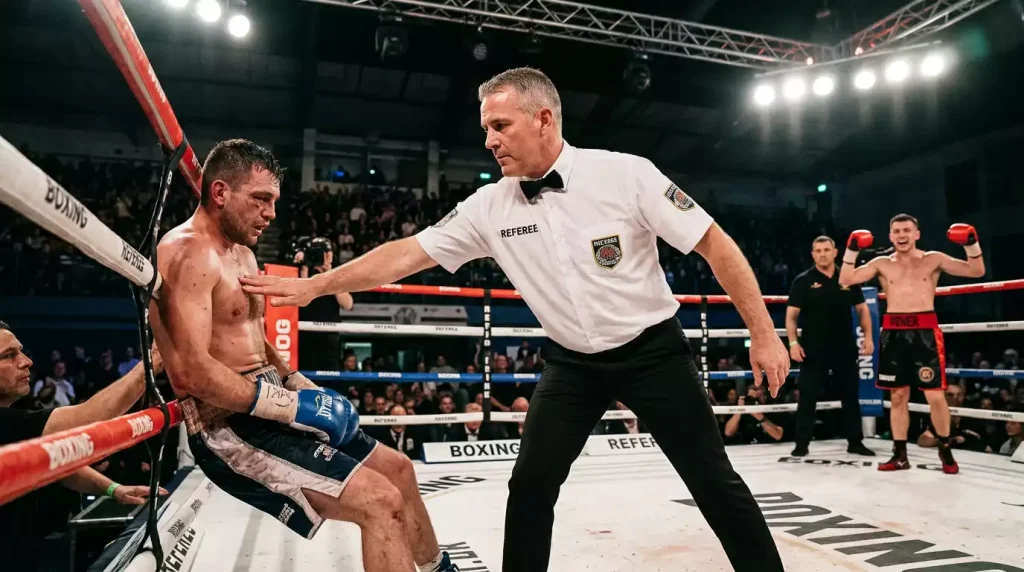
The moneyline tells you who wins. Method of victory tells you how — and that distinction is where the real value hides. I have a standing rule: before I place any moneyline bet on a boxing fight, I check the method of victory market first. If I can get better value on “Fighter A by decision” than on “Fighter A to win” outright, the method of victory market is where my money goes. The payout is larger, the analysis is more specific, and bookmakers misprice these markets more frequently than they misprice the headline moneyline. Over 350 million boxing fans worldwide bet on who wins. Far fewer bet on how, which is exactly why the how is where the edge lives.
Understanding the Method of Victory Market
Most UK bookmakers offer method of victory in six or eight outcomes. The standard six-way market looks like this: Fighter A by KO/TKO, Fighter A by decision, Fighter B by KO/TKO, Fighter B by decision, draw by decision, and technical draw. Some bookmakers expand this to eight outcomes by splitting KO from TKO or adding “stoppage by corner retirement” as a separate category. The more granular the market, the higher the odds on each individual outcome and the greater the potential for mispricing.
The crucial pricing dynamic is how the bookmaker distributes probability across these outcomes. If Fighter A is a 1/3 moneyline favourite, the bookmaker needs to split that 75% implied probability between “by KO/TKO” and “by decision” for Fighter A alone. That split is where most of the value originates. A pressure fighter with 80% of his wins coming inside the distance should have a heavy skew toward KO/TKO, but if the bookmaker assigns a generic 50/50 split, the KO/TKO price is too long and the decision price is too short. Spotting that skew is the core skill in method of victory betting.
I calculate my own probability split for every fight I analyse. Fighter A’s KO rate against opponents of similar quality, adjusted for the specific opponent’s durability, gives me a base estimate for the KO/TKO probability. The remainder of Fighter A’s win probability flows to the decision line. When my estimate diverges from the bookmaker’s implied split by more than 10%, I have a bet.
When KO/TKO Value Peaks
Three years ago I backed a relatively unknown super-middleweight to win by KO/TKO at 7/2. The moneyline had him as a slight underdog at 6/5, which was reasonable — he was stepping up in class and his opponent was technically sound. What the moneyline missed, and what the method of victory market mispriced, was that this fighter had stopped every single opponent he had faced in the past two years. His power was not just good — it was fight-ending in every contest. The opponent, technically accomplished but chinny, had been stopped twice in his last five bouts. The KO/TKO line should have been closer to 2/1 given the power-versus-chin dynamic. At 7/2, I was getting nearly double the value. He stopped the opponent in round six.
KO/TKO value tends to peak in matchups that combine a genuinely powerful puncher with an opponent who has durability questions. The market often prices the favourite’s moneyline correctly but fails to adjust the method of victory split aggressively enough when the knockout pathway is dominant. This happens because the bookmaker’s model assigns historical base rates for KO percentage at the division level, then adjusts for fighter-specific data. If the base rate for the division is 45% of fights ending inside the distance, but the specific matchup features two fighters whose combined profile suggests 70%, the KO/TKO price will be too long.
The opposite situation — when KO/TKO is overpriced — also creates value on the decision line. A fight between two technically excellent defensive fighters with low stoppage rates will likely go the distance, but the bookmaker still allocates substantial probability to KO/TKO because the base rate demands it. In those fights, “Fighter A by decision” at 3/1 can represent genuine value when your analysis suggests a 35% to 40% probability of that specific outcome.
Decision Betting and the Art of Reading Scorecards
Andrew Rhodes, the chief executive of the UK Gambling Commission, has emphasised that gambling products should be transparent and fairly structured. Method of victory markets are transparent in their pricing, but understanding what a “decision” actually entails requires more nuance than most bettors apply. A decision encompasses unanimous decision, split decision, and majority decision. In close fights, the type of decision matters because a fighter who dominates the middle rounds but fades late is more likely to win a split decision than a unanimous one. Some bookmakers offer separate markets on the decision type, which adds another layer of granularity.
To bet decisions profitably, you need a model for how the fight will unfold round by round. A fighter who is expected to win eight rounds clearly beats one who wins six and loses six. But a fighter who wins seven rounds by slim margins — close rounds that could go either way depending on what the judges value — is a split decision candidate, not a unanimous decision candidate. The judges’ emphasis on effective aggression versus ring generalship versus clean punching affects which fighter benefits from close rounds, and that emphasis varies by jurisdiction and by individual judge.
I track three metrics for decision prediction: each fighter’s percentage of wins that go to decision, their opponent’s percentage of losses by decision, and the average number of rounds in their recent fights. When all three indicators point toward a distance fight, the decision line becomes the primary betting target rather than the moneyline. The 5,825 licensed betting premises still operating in the UK are competing with online platforms that offer these granular markets, and the online method of victory pricing is where the analytical bettor finds the most consistent edge.
Pricing Technical Stoppages and Corner Retirements Separately
Most bettors lump all stoppages together, but there is a meaningful distinction between a clean knockout, a referee TKO, and a corner retirement. A clean knockout — fighter unconscious on the canvas — requires concussive power. A referee TKO requires sustained punishment that forces the referee to intervene, which is more about volume and accumulation than single-punch power. A corner retirement requires a fighter’s team to decide the damage is too severe to continue, which correlates with body work, cuts, and swelling rather than knockdowns.
When a bookmaker separates these outcomes, the pricing on corner retirement is almost always too long. Corner retirements are more common than the odds suggest because they happen in situations the public does not find dramatic — a fighter quits on the stool after eight rounds of body punishment, a cut worsens between rounds and the corner pulls their fighter. These endings do not make highlight reels, which means the public does not bet on them, which means the bookmaker does not sharpen the price. For a more detailed exploration of how different fight-ending scenarios affect bet settlement, the boxing betting rules guide covers the specific settlement conditions for every stoppage type.
Articles



Published by the RINGWAGER team.
