
How Promoters and Networks Shape Boxing Betting Markets
 Available in US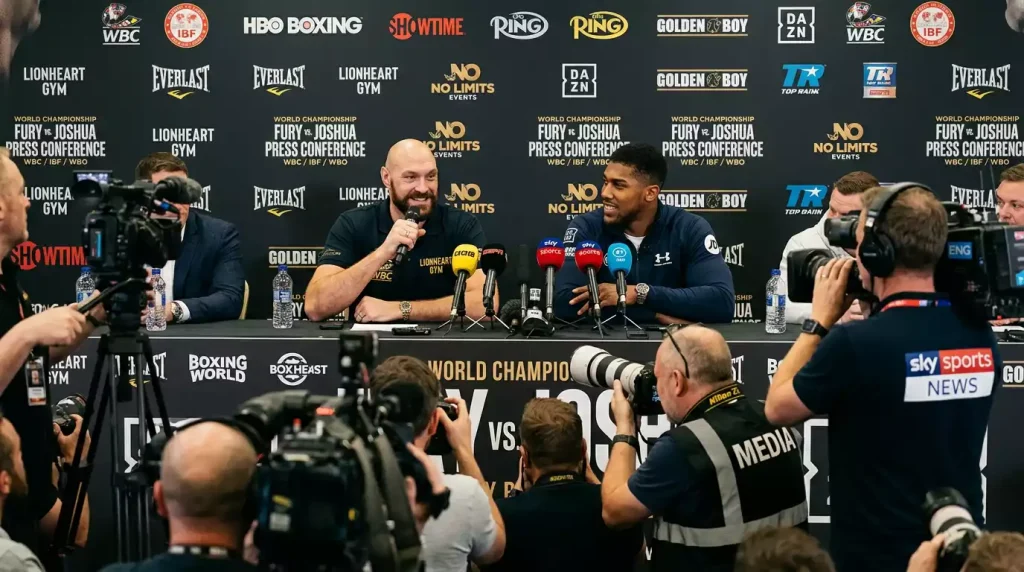
I spent three years ignoring the business side of boxing and focusing purely on what happens inside the ring. My results were decent but inconsistent. The moment I started factoring in who promotes a fighter, which network broadcasts the card, and what commercial incentives sit behind each bout, my strike rate improved noticeably. Boxing is the only major sport where the matchmaking is controlled not by a league or governing body, but by private promoters whose financial interests directly influence which fights happen, when they happen, and on whose terms. If you bet on boxing without understanding this structure, you are missing half the picture.
The Promoter’s Role in Matchmaking and How It Affects Odds
A promoter’s job is to build a fighter’s career in a way that maximises commercial value. That means selecting opponents who provide the right level of challenge at the right time — not too easy to bore the audience, not too dangerous to derail the investment. Every promotional outfit manages a stable of fighters at various career stages, and the matchmaking for each fighter reflects where they sit on the development curve.
For bettors, this creates a readable pattern. A prospect being groomed for a title shot will face progressively tougher opposition, but the step-ups will be calibrated. The opponent will be good enough to test a specific skill — fighting a southpaw for the first time, going twelve rounds for the first time, facing someone with genuine power — but will lack the overall package to pose a serious upset threat. The betting market prices these fights as one-sided, and they usually are. The edge lies not in the outright result but in the method: these developmental fights often go longer than the market expects, because the prospect’s team values rounds of experience more than an early stoppage.
When two fighters from the same promotional stable fight each other, the dynamics shift again. In-house fights happen when the promoter decides the commercial return justifies the risk of one of their assets losing. These bouts tend to be genuine competitive matchups — the promoter would not stage them otherwise — and the odds reflect that competitiveness. The UK’s online gambling sector generated 7.8 billion pounds in gross gambling yield last year, and a portion of that flows through boxing markets where promotional matchmaking influences the true probability in ways that the headline statistics do not capture.
Network Broadcasting Deals and Their Hidden Impact on Fight Outcomes
Boxing’s move from free-to-air television to streaming platforms and subscription networks has transformed the sport’s economics — and its betting markets. When a network invests heavily in a fighter’s career through a multi-fight deal, that investment creates an incentive structure. The network needs the fighter to win, to keep winning, and to build toward a marquee event that justifies the contract. This does not mean fights are fixed. It means the opponents are selected to give the contracted fighter the best chance of success while still appearing credible to the audience.
Josh Nagel, the SportsLine analyst, has observed that understanding the commercial structures behind major boxing events provides an additional layer of insight that purely statistical models miss. The opponent selection process on network cards is not random — it reflects a negotiation between the promoter’s ambition for their fighter and the network’s need for compelling content that justifies subscriber fees.
For bettors, the practical implication is this: fighters on major network deals are more likely to face opponents at the right level for where they are in their career. Early fights on a new deal will be confidence-builders. Mid-deal fights will be step-ups. The final fight on a deal will aim for the biggest possible event — a title shot, a unification, a crossover bout — because the network wants to maximise the return on their investment. Each stage has different betting characteristics: the early fights offer value in the method and rounds markets, the mid-deal fights are closer to true coin-flips than the market often prices them, and the late-deal marquee events attract so much public money that the underdog is frequently overpriced.
How Venue Selection Reveals Promotional Intent
Where a fight takes place tells you more about the expected outcome than most bettors realise. A British fighter headlining at the O2 Arena or AO Arena is fighting on home soil in front of a partisan crowd, with judges historically more sympathetic to the home fighter in close rounds. A fighter sent to their opponent’s country for a title fight is either supremely confident or being placed in a position where a creditable loss is an acceptable outcome for the promotional team.
I track venue selection as a variable in my pre-fight analysis. Home fighters win close decisions at a higher rate than away fighters — the effect is modest, roughly 5% to 8% advantage in fights that go to the scorecards — but in a sport where the margin between a winning and losing bet is measured in single-digit percentages, that edge matters. Boxing has 350 million fans worldwide, and the sport’s global footprint means fights take place everywhere from Las Vegas to Riyadh to Wembley. Each venue carries its own judging tendencies, crowd dynamics, and atmospheric effects that influence how fighters perform and how judges score.
Neutral venues — fights staged in countries where neither fighter has a significant fan base, often in the Middle East — strip away the home-field variable but introduce others. Fighters travelling to unfamiliar locations may face disrupted preparation schedules, jet lag, and an atmosphere that lacks the emotional energy they are accustomed to. These fights tend to be decided by the fighter who adapts better to the sterile environment, and that is typically the more experienced campaigner rather than the younger, more emotional competitor.
Using Promotional Structures as a Betting Edge
The practical application of promotional analysis comes down to a single question: does the business context change the probability of the outcome, and if so, is that change reflected in the price?
I build a “promotional profile” for each fighter on my card. Who promotes them? Which network carries their fights? Where are they in their career arc — building, peaking, or declining? Is this fight a step-up, a keep-busy, or a genuine test? How does the venue serve their interests? The answers to these questions do not replace technical fight analysis — punch stats, stylistic matchups, and conditioning still determine who wins — but they provide a lens through which to interpret the market price.
When a highly promoted fighter is priced at 1.3 against an opponent selected specifically to lose creditably, the 1.3 might be accurate — the promotional machinery has manufactured a fight with a predictable outcome. But when a highly promoted fighter is priced at 1.5 against an opponent who was not their team’s first choice, who was brought in as a late replacement, or who represents a stylistic nightmare that the promotional team failed to avoid, that 1.5 underestimates the risk. The promotional context tells you whether the price reflects a genuine assessment of probability or a market distorted by the narrative the promoter has built. Learning to analyse a fight before betting means incorporating every variable that affects the outcome, and the promoter’s fingerprints are on all of them.
Articles


Published by the RINGWAGER team.
