
Live Boxing Betting: In-Play Markets, Odds Shifts, and Round-by-Round Strategy
 Available in US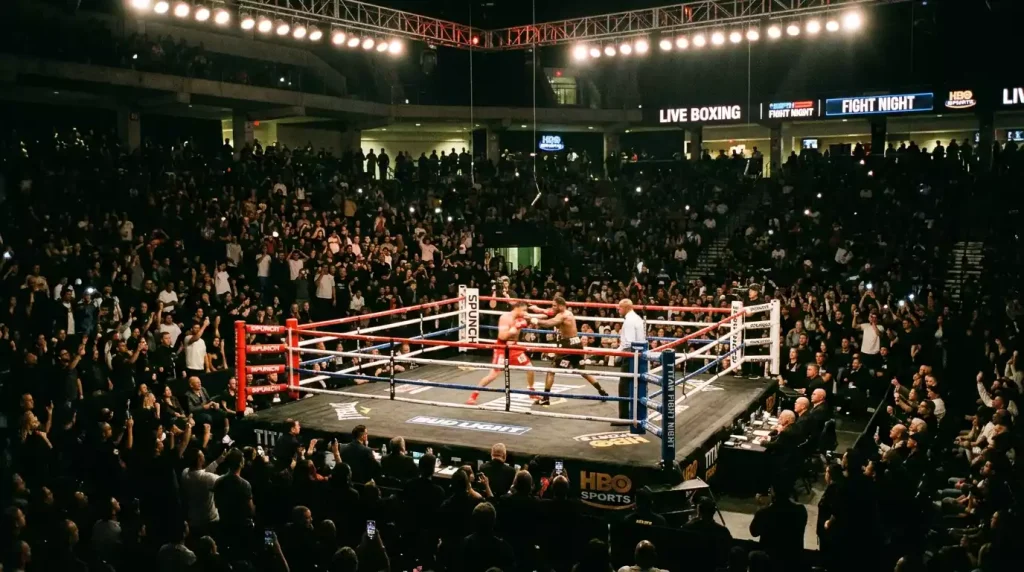
The first time I placed a live boxing bet, I missed the price. I had watched a clean left hook buckle the favourite’s legs in round three, scrambled to open my betting app, navigated to the in-play market, and by the time my thumb hit the confirm button, the odds had already moved past the number I wanted. The whole process took maybe forty seconds. In live boxing betting, forty seconds is a lifetime.
That experience reshaped how I approach fight nights entirely. Pre-fight betting is a considered process — you have hours, sometimes days, to research, compare odds, and decide. Live betting is a different discipline altogether. It rewards preparation, reaction speed, and the ability to process visual information from the ring and convert it into a probability estimate faster than the bookmaker’s trading team can update their models. The integration of live streaming into UK bookmaker platforms has boosted user engagement by 25%, and that surge reflects something real: watching and betting simultaneously on a boxing match is a fundamentally different experience from placing a wager and waiting for a result.
This guide covers the mechanics of in-play boxing betting in the UK — how odds move round by round, what triggers those movements, which markets are available mid-fight, and how to avoid the errors that turn a strategic edge into impulsive losses. I have been betting boxing in-play for over seven years, and the framework I use today bears almost no resemblance to the chaotic approach I started with.
How In-Play Boxing Betting Works
UK bookmakers process roughly 290 million online bets every month across all sports. Boxing’s share of that figure is small compared to football or horse racing, but the in-play segment of boxing betting has grown faster than any other market type in the sport over the past five years. The reason is structural: boxing is perfectly suited to live wagering because the action unfolds in discrete, timed rounds with natural breaks between them. Those sixty-second intervals give both bettors and bookmakers a window to reassess, and the odds reset accordingly.
Here is how the process works in practice. Before the opening bell, you can bet the pre-fight markets — moneyline, round betting, method of victory, over/under rounds. The moment the bell rings for round one, those pre-fight markets close or suspend, and a new set of in-play markets opens. During the round itself, some operators keep a stripped-down live moneyline available, updating the price in near real-time as the action unfolds. Other operators suspend all markets during active fighting and only reopen between rounds. Which model your bookmaker uses matters — it determines whether you can react to a knockdown as it happens or whether you must wait until the bell.
Between rounds, the full suite of in-play markets typically reopens for 30 to 50 seconds. This is the primary betting window for live boxing. Odds are recalculated based on what just happened in the preceding round — scorecards, visible damage, knockdowns, ring control — and the trading team adjusts prices accordingly. The window closes when the bell rings for the next round. In a twelve-round fight, that gives you eleven inter-round windows, each lasting less than a minute. Eleven chances to find a price that does not reflect what you just watched happen in the ring.
The operational mechanics vary between operators. Some offer automatic odds refresh with a slight delay (typically 2-5 seconds), meaning the price you see on screen might not be the price you get when you confirm. Others use a manual acceptance model where your bet is submitted at the displayed price and either accepted or rejected by the trading desk within seconds. Understanding your bookmaker’s model is not a minor detail — it determines whether a strategy built around rapid reaction to in-ring events is even feasible on that platform.
Round-by-Round Betting Opportunities
Round four of a middleweight fight last October gave me one of the cleanest live-betting opportunities I have had all year. The favourite — priced at 1/5 pre-fight — had controlled the first three rounds comfortably, jabbing from range and keeping the challenger at distance. Then, midway through round four, the challenger landed a straight right hand that visibly wobbled the favourite. The crowd erupted. The favourite survived the round, but he was holding, clinching, and clearly unsettled. When the in-play market reopened between rounds four and five, the favourite’s moneyline had shifted from 1/8 (where it sat after round three) to 1/3. The challenger’s price had collapsed from 5/1 to 7/4.
That swing was significant but, in my assessment, still insufficient. The favourite’s legs had been genuinely compromised. His movement in the final thirty seconds of round four was laboured in a way that suggested the effect of the punch would carry into subsequent rounds. I backed the challenger at 7/4. He won by stoppage in round seven. The point of this story is not the outcome — it is the process. Live boxing betting rewards bettors who can read what happened in a round, translate that observation into a probability adjustment, and compare their new estimate to the bookmaker’s updated price within a thirty-second window.
Josh Nagel’s approach to heavyweight fight analysis captures this principle neatly. When two fighters with combined knockout rates above 90% step into the ring, the early rounds become a sequence of high-volatility events where each clean landing has the potential to transform the entire market. Nagel’s insight — that those knockout rates, combined with stated tactical intentions, create specific round-by-round probability curves — is exactly the kind of pre-fight preparation that makes live betting actionable. You should not be constructing your analytical framework between rounds. You should arrive at the fight with a map of scenarios already built, and the live action simply tells you which branch of the map you are on.
The most common round-by-round pattern I observe in live markets is overreaction to early-round dominance. If the favourite wins rounds one through three clearly, their live moneyline often compresses to a point where there is no remaining value — even if the fight still has nine rounds left and the challenger is known for late-round surges. The market prices the current trajectory as though it will continue linearly, which it often does not in boxing. Body work accumulates. Fighters who start slowly sometimes do so deliberately. Cardio advantages do not manifest until rounds eight through twelve. Backing a challenger at an inflated price after three lost rounds — when your pre-fight analysis identified them as a strong finisher — is a live-betting edge that requires nothing more than patience and preparation.
What Moves Live Boxing Odds
What makes boxing odds jump mid-fight? I have tracked live odds movements across over 200 fights, and the triggers fall into a clear hierarchy of impact. Understanding this hierarchy helps you anticipate market movements before they happen — which is the core skill that separates reactive live bettors from strategic ones.
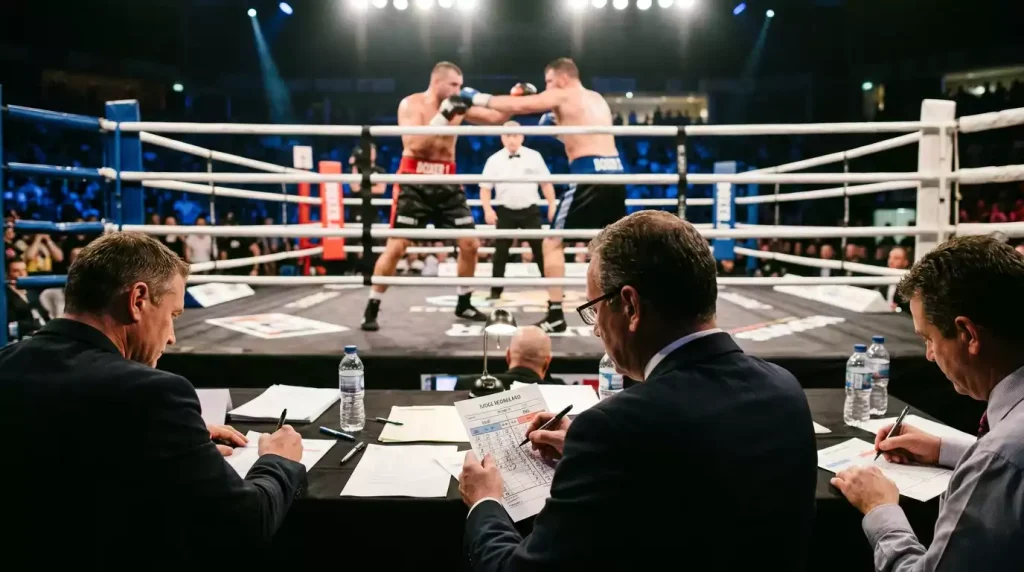
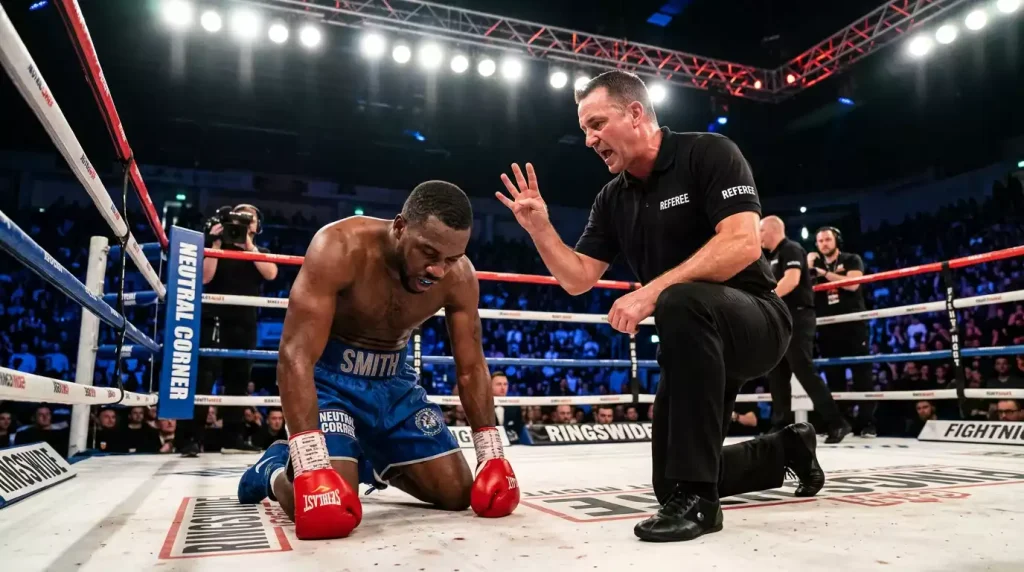
Knockdowns are the single largest trigger. A clean knockdown typically moves the moneyline by 40-60% in implied-probability terms, depending on the round and the severity. An early knockdown (rounds one through four) produces a larger shift than a late knockdown (rounds nine through twelve), because the early knockdown implies the hurt fighter must survive more remaining rounds. A flash knockdown — where the fighter rises immediately and shows no lasting effects — produces a smaller shift than a knockdown where the fighter takes a full eight-count and returns to action on unsteady legs. The market distinguishes between these scenarios, but it does not always distinguish accurately. This is where your ringside judgement adds value.
Cuts and swelling are the second-tier trigger. A bad cut over the eye, especially one caused by a punch rather than an accidental clash of heads, can shift odds meaningfully because it introduces the possibility of a stoppage by the ringside doctor. The severity of the cut matters: a superficial nick has minimal impact, but a deep laceration that the cutman is visibly struggling to control between rounds can move the injured fighter’s price by 15-25% in implied probability. Swelling around the eye that begins to obstruct vision is treated similarly by the trading teams.
The UK boxing broadcasting landscape has shifted since Queensberry Promotions moved exclusively to DAZN and Sky Sports pivoted toward major PPV events following the end of its BOXXER deal. For live bettors, this reshuffling matters because the platform you watch the fight on determines what you see and when you see it. Camera angles, commentary quality, and the frequency of slow-motion replays all affect your ability to assess damage between rounds. A DAZN broadcast might show a replay of a body shot from an angle that confirms the impact; a different feed might miss it entirely. Your information advantage in live betting is only as good as your visual access to the fight.
Fatigue is the subtlest trigger and the one the market is slowest to price. A fighter whose punch output drops from 60 per round in the first four rounds to 35 per round in rounds five and six is showing signs of conditioning problems that will likely worsen as the fight progresses. The bookmaker’s algorithm might not weight punch-output decline as heavily as a knockdown, but for a bettor watching the fight, the visual evidence of a fighter’s deteriorating work rate is actionable information that the live odds have not yet fully absorbed.
Available In-Play Markets During a Boxing Match
Not every market that exists pre-fight survives into the live environment. The in-play market menu is typically a stripped-down version of what was available before the opening bell, and knowing exactly what you can bet on mid-fight prevents wasted time navigating menus during those precious inter-round seconds.
The live moneyline is always available between rounds and, at some operators, during rounds as well. This is the most liquid in-play market — the one with the tightest spread and the fastest price updates. If your live-betting strategy centres on backing or laying a fighter based on how the fight is unfolding, the moneyline is your primary tool. The prices here reflect the bookmaker’s round-by-round assessment of who is winning and by how much.
Next-round markets are the most distinctively “live” offering. These allow you to bet on what will happen in the immediately upcoming round: will there be a knockout, will the round end with both fighters standing, will a specific fighter score a knockdown. These markets open between rounds and close when the bell rings. The edges here come from reading a fighter’s condition more accurately than the algorithm — noticing that a fighter’s legs looked shaky during the corner work, or that a cutman’s body language suggested the cut was worse than it appeared on camera.
Over/under total rounds adjusts continuously as the fight progresses. If the pre-fight line was set at 8.5 rounds and the fight reaches round six without a stoppage, the live over/under might shift to 10.5 or simply offer a “fight to go the distance” yes/no market at adjusted prices. This market rewards bettors who have a strong sense of fight pace — whether the accumulation of damage suggests a stoppage is coming or whether both fighters have settled into a rhythm that points toward a decision.
Method of victory markets narrow as the fight develops. Pre-fight, you might have had six or more options (KO/TKO by Fighter A, KO/TKO by Fighter B, decision for A, decision for B, draw, technical decision). Live, some operators collapse this to three or four options once the fight’s trajectory becomes clearer. If a fight reaches round nine without either fighter being seriously hurt, the method-of-victory market might only offer “decision” as the available selection, with the KO/TKO options having been removed or priced at extreme longshot odds.
Live Streaming, Data Delay, and Timing
Three-quarters of UK punters aged 18 to 24 place bets using a mobile phone as their primary device. For live boxing betting, that statistic has practical consequences beyond convenience: it means the majority of in-play bettors are watching the fight and placing bets on the same screen, or at best on two screens within arm’s reach. The quality of your live stream directly determines the quality of your live betting, because every decision depends on what you can see happening in the ring.
Stream delay is the silent killer of live betting edge. The broadcast you receive through a bookmaker’s app or a streaming service is not truly live — it runs between 3 and 15 seconds behind the actual event, depending on the platform, the encoding pipeline, and your internet connection. The bookmaker’s trading team, meanwhile, has access to a lower-latency feed or even ringside observers. This delay means that a knockdown you see on your screen might already be reflected in the updated odds by the time you react. The practical mitigation is simple but important: never bet reactively during a round unless your platform explicitly offers a real-time feed. Save your in-play bets for the inter-round windows, where the market is fully open and the delay is irrelevant because both you and the bookmaker are working from the same settled information.
Audio is an underused information source. Commentators — particularly experienced ones on the main UK PPV boxing broadcasts — often relay information about a fighter’s condition that the camera has not yet shown clearly: laboured breathing audible through ringside microphones, a corner shouting instructions that suggest a tactical shift, or a referee’s warning that indicates accumulated fouls. I keep the volume high during inter-round breaks specifically because the corner audio sometimes reveals more than the camera. A trainer telling a fighter to “move your head, he’s timing you” is a directional signal that the opponent’s straight punches are landing cleanly — information that has implications for whether a stoppage is developing.
Device management on fight night matters more than most bettors realise. If you are streaming the fight on your phone and betting on the same device, switching between the stream and the betting app takes 3-5 seconds on a typical smartphone. Over the course of a 30-second inter-round betting window, that toggle time consumes a significant fraction of your decision-making window. My setup: stream on a tablet or laptop, bet on the phone. Two screens, dedicated purposes, no toggling. It sounds like a minor logistical detail until the first time it saves you from missing a price by two seconds.
Common Live Betting Errors and How to Avoid Them
Andrew Rhodes, the UKGC’s chief executive, has pointed to the link between frequent online gambling and elevated risk profiles — urging operators to examine the risks within their customer bases more closely. Live boxing betting sits squarely in the risk zone he described, because the speed of the environment and the emotional intensity of watching a fight combine to override the disciplined process that profitable betting requires. The 2.7% of UK adults classified as experiencing gambling-related harm disproportionately includes people who bet impulsively, and in-play boxing is an environment purpose-built for impulse.
The first and most damaging live-betting error is chasing a pre-fight loss. You backed the favourite pre-fight, the fight is not going as expected, and now you are staring at live markets looking for a way to “recover” your stake. This is not strategy — it is emotional reaction dressed in the language of opportunity. If your pre-fight analysis was wrong, the correct response is to accept the loss, not to compound it with an unplanned in-play bet based on desperation rather than probability.
The second error is overreacting to single moments. A knockdown in round two looks devastating in real time. But a significant percentage of fighters who get knocked down early in a fight go on to win — either by recovering their composure and outboxing the opponent over the remaining rounds, or by the knockdown opponent exhausting themselves trying to finish the fight too aggressively. The market moves sharply after a knockdown, and the temptation is to ride that movement. But unless your analysis of the fighter’s recovery ability, chin durability, and the opponent’s finishing record supports the trade, you are betting on the spectacle rather than the probabilities.
The third error is betting too many rounds. A twelve-round fight offers eleven inter-round betting windows. Betting all eleven is not a strategy — it is the in-play equivalent of betting every card on the boxing calendar. Discipline means identifying the one or two windows per fight where your visual assessment of what just happened in the ring genuinely diverges from the bookmaker’s updated price. If the prices accurately reflect what you saw, do nothing. “No bet” is the most valuable position in live boxing betting, and the hardest one to hold when your app is open and the market is moving in front of you.
Set your limits before the first bell. Decide the maximum number of in-play bets you will place on a single fight (I cap mine at two), the maximum stake per live bet (I use half my standard pre-fight unit size), and the conditions under which you will bet at all. Write these rules down. Put them next to your screen. When round six arrives and the adrenaline is flowing and the price looks too good to pass up, those written rules are the only thing standing between your strategy and your impulses.
Live Boxing Betting FAQ
Articles
Created by the "RINGWAGER" editorial team.
