
Boxing Betting Exchanges: Back, Lay, and Trade
 Available in US
The first time I used a betting exchange for a boxing match, I accidentally laid a fighter instead of backing him. I did not realise until the bell rang and every punch he landed made my stomach drop rather than rise. That mistake cost me forty pounds and taught me more about exchange mechanics in twelve rounds than a year of reading ever could. Exchanges operate on a fundamentally different model from traditional bookmakers, and once you understand the distinction, you unlock a set of tools — laying, trading, arbitrage — that simply do not exist in the conventional betting world.
How Exchange Betting Differs from Traditional Bookmakers
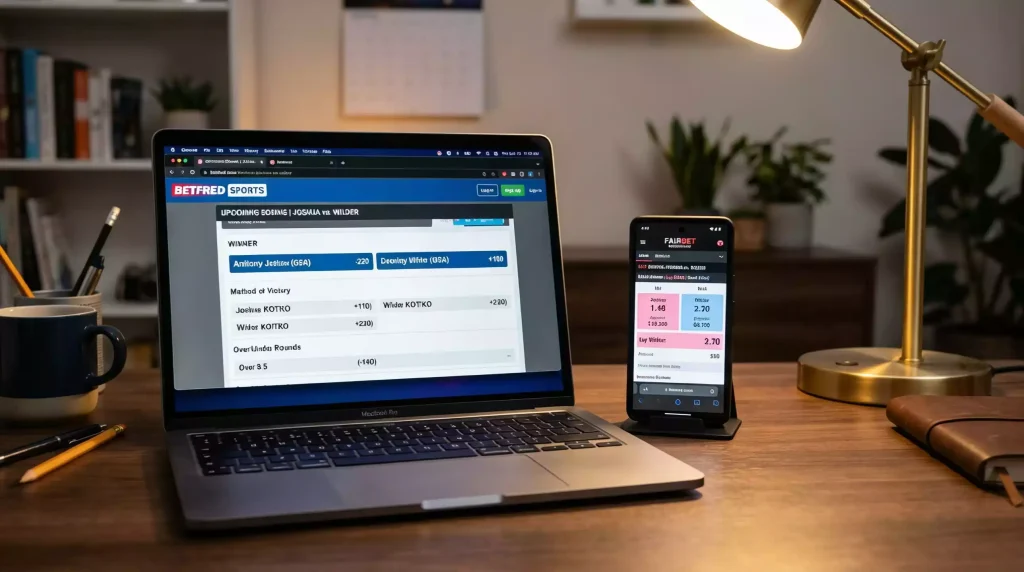
I spent my first five years betting exclusively with traditional bookmakers before touching an exchange, and the transition felt like moving from a fixed-price shop to an auction house. With a bookmaker, you accept the odds on offer. The bookmaker sets the price, builds in a margin, and your only decision is whether to take it or leave it. With an exchange, you bet against other punters. The exchange itself takes no position on the outcome — it simply matches your bet with someone on the other side and charges a small commission on winning bets.
This peer-to-peer structure has three practical consequences for boxing bettors. The odds are typically better because there is no built-in bookmaker margin — just the commission, which on most exchanges sits between 2% and 5% of net winnings. The UK’s online gambling sector generated 7.8 billion pounds in gross gambling yield in the year to March 2025, and exchanges captured a meaningful slice of that by offering sharper prices than traditional operators. The second consequence is that you can both back and lay. Backing is straightforward — you bet on a fighter to win. Laying means you bet against a fighter, effectively taking on the role of the bookmaker for that specific outcome. The third consequence is liquidity. Exchange odds only exist if someone is willing to take the other side. For a major heavyweight title fight, liquidity is deep and the spreads are tight. For an undercard bout between two unranked fighters, you might struggle to get matched at all.
The commission model means exchanges profit regardless of which fighter wins — they earn from turnover, not from outcomes. This removes the structural conflict of interest inherent in traditional bookmaking, where the bookmaker profits when you lose. It does not mean exchanges are always superior, but it does mean the pricing incentives are fundamentally different.
The Art of Laying a Fighter
Why would you ever bet against a fighter winning? That question tripped me up for months until I reframed it. Laying is not pessimism — it is precision. When you lay a fighter, you are saying the probability of them winning is lower than the market implies. You do not need to know who will win. You just need to know who is overpriced.
The mechanics work like this. If a fighter is quoted at 3.0 on the exchange and you lay them for twenty pounds, you stand to win twenty pounds if they lose — but you are liable for forty pounds if they win. Your liability is always the lay odds minus one, multiplied by your stake. That asymmetry is what puts people off, but it is also what creates opportunity. In boxing, where upsets happen with surprising frequency — the global boxing betting market is worth an estimated 4.5 billion dollars and growing at 8.1% annually precisely because of the sport’s volatility — laying an overvalued favourite can be a disciplined, profitable strategy over time.
The fights where laying works best tend to share specific characteristics. An ageing champion coming off a long layoff against a hungry, underestimated challenger. A fighter moving up in weight where their power advantage disappears. A stylistic matchup where the favourite’s strengths are neutralised by the opponent’s approach. In each case, the market price reflects name recognition and recent form rather than the specific dynamics of the fight ahead. That gap between reputation and reality is where laying finds its edge.
Trading In-Play on Boxing Exchanges
I once backed a fighter pre-fight at 2.8, watched him drop his opponent in the second round, and laid him at 1.3 while the referee was still counting. The fight ended in the third, and I did not care who won — I had locked in a profit regardless of the result. That is trading, and it is the single most powerful technique available on boxing exchanges.
Trading works by backing at a higher price and laying at a lower price — or vice versa. The difference between the two prices, minus commission, is your guaranteed profit. In boxing, price movements during a fight are dramatic and frequent. A knockdown can shift a fighter’s exchange price from 2.0 to 1.2 in seconds. A cut that threatens a stoppage can push a favourite’s price from 1.5 to 3.0. Each of these swings is a trading opportunity if you are positioned and ready. The UK generates roughly 290 million individual online bets per month across all sports, and boxing’s in-play volatility attracts a disproportionate share of exchange traders relative to its overall market size.
The risk in trading is execution. Exchange prices move fast during live boxing, and if you cannot get matched at your target lay price, you are left holding an open position. Internet latency, exchange server load during peak events, and the sheer speed of boxing — where a single punch can transform the market — all work against clean execution. I have learned to set my lay orders in advance at pre-determined price levels rather than chasing the market reactively. If the price reaches my target, the order fills automatically. If it does not, I accept the outcome on my original back bet. Discipline beats speed in exchange trading.
When Exchanges Beat Bookmakers and When They Do Not
A friend of mine swears by exchanges for every bet he places. I think that is a mistake. Exchanges are superior in specific situations and inferior in others, and knowing which is which saves you money.
Exchanges consistently beat bookmakers on price for match-winner markets in high-profile fights. The more liquid the event, the tighter the exchange spread, and the closer the odds get to the true probability. For a world title fight headlining a major pay-per-view card, exchange prices routinely offer 3% to 8% better value than the best bookmaker odds. For exotic markets — round betting, method of victory, total rounds — bookmakers often have the advantage because exchange liquidity in those markets is thin. You might find round 7 KO quoted at 25.0 on an exchange, but if only fifteen pounds is available at that price, you cannot build a meaningful position. A bookmaker will let you stake whatever their maximum allows at a fixed price, even if that price carries a wider margin.
The other area where bookmakers win is promotions. Free bets, enhanced odds, and sign-up offers are tools of the traditional bookmaking model. Exchanges do not offer them because their revenue comes from commission, not from customer losses. If you are using matched betting strategies, the interplay between bookmaker promotions and exchange laying is where the real value sits — but the promotional value originates with the bookmaker, not the exchange.
My approach is straightforward. For match-winner bets on major fights, I check the exchange first. If the price is meaningfully better than the best bookmaker offer after commission, I use the exchange. For prop bets, round betting, and method of victory, I stick with bookmakers where the fixed price and guaranteed liquidity outweigh the exchange’s theoretical pricing advantage.
Articles

Created by the "RINGWAGER" editorial team.
